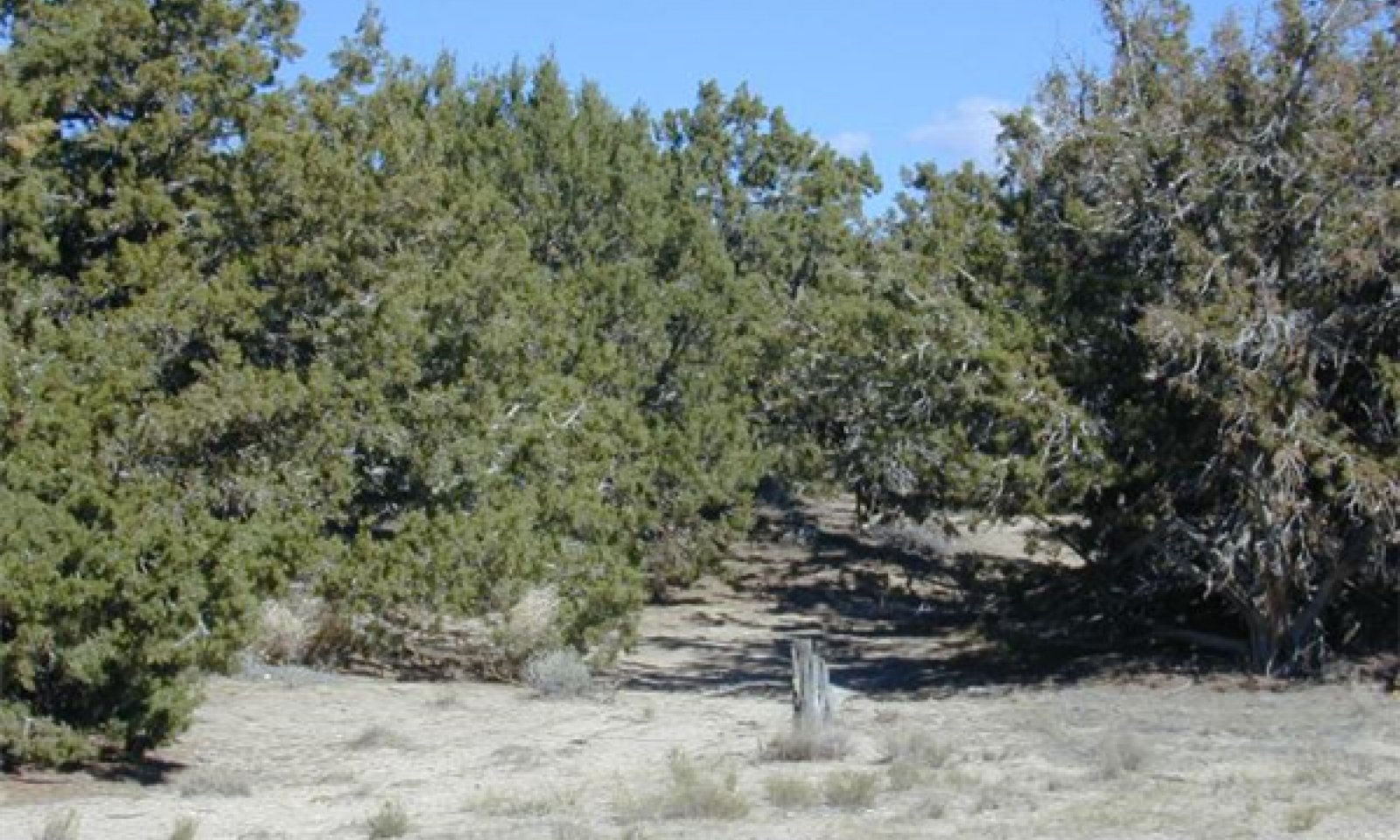
Ecological dynamics
As ecological condition deteriorates due to overgrazing, Indian ricegrass (Achnatherum hymenoides), needle and thread (Hesperostipa comata), and bluebunch wheatgrass (Pseudoroegneria spicata) decrease, while low rabbitbrush (Chrysothamnus viscidiflorus), black sagebrush (Artemisia nova), snakeweed (Gutierrezia sarothrae), and juniper (Juniperus osteosperma) increase.
When the potential natural plant community is burned, juniper, Indian ricegrass, needle and thread, and bluebunch wheatgrass decrease while low rabbitbrush, Sandberg bluegrass (Poa secunda), and James' galleta grass (Pleuraphis jamesii) increase.
Annual grasses and annual forbs are most likely to invade this site.
Analyzing previously collected data and new field data will be needed to further develop vegetation dynamics.
State 1
Reference State
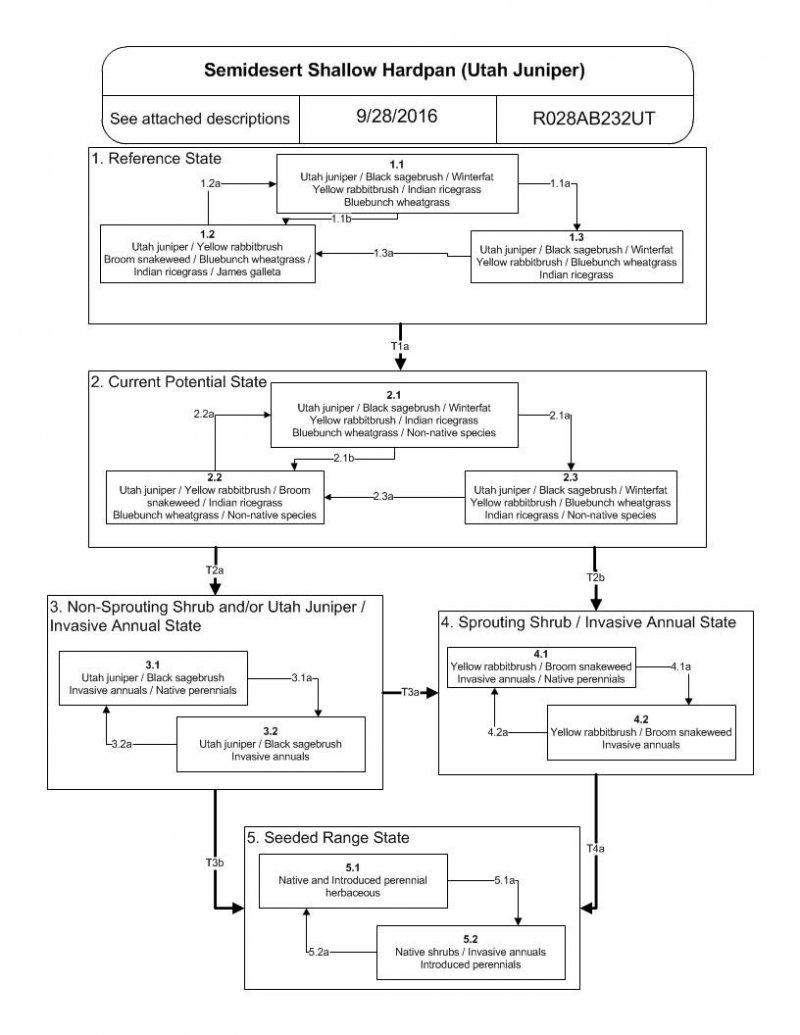
The Reference State has three community phases influenced by disturbance, such as fire or drought. Utah juniper is the dominant tree in all community phases, while the understory changes the most with disturbance. Fire will generally remove much of the shrub layer, increasing re-sprouting shrubs like rabbitbrush (community phase 1.2). Long term drought can reduce herbaceous understory (community phase 1.3).
Community 1.1
Utah juniper/black sagebrush/winterfat/rabbitbrush/Indian ricegrass/bluebunch wheatgrass
Community Phase 1.1 is composed of scattered mature Utah juniper as the dominant woodland species with a few singleleaf or twoneedle pinyon occurring on moister locations. The understory shrub layer is dominated by black sagebrush and winterfat. Yellow rabbitbrush and Nevada ephedra are commonly present. Principal grasses include Indian ricegrass and bluebunch wheatgrass with lesser amounts of needle and thread and James’ galleta grass. Scattered forbs typically include longleaf phlox and hairy balsamroot. Percent composition by air-dry weight is 45 percent grass, 5 percent forbs, 40 percent shrubs, and 10 percent trees. Natural fire frequency is estimated to be 60 to 80 years.
Table 5. Annual production by plant type
| Plant type |
Low
(lb/acre) |
Representative value
(lb/acre) |
High
(lb/acre) |
| Grass/Grasslike |
125 |
200 |
325 |
| Shrub/Vine |
100 |
160 |
260 |
| Tree |
25 |
40 |
65 |
| Forb |
13 |
20 |
33 |
| Total |
263 |
420 |
683 |
Table 6. Ground cover
| Tree foliar cover |
5-10%
|
| Shrub/vine/liana foliar cover |
10-25%
|
| Grass/grasslike foliar cover |
15-30%
|
| Forb foliar cover |
2-5%
|
| Non-vascular plants |
0%
|
| Biological crusts |
0%
|
| Litter |
0%
|
| Surface fragments >0.25" and <=3" |
0%
|
| Surface fragments >3" |
0%
|
| Bedrock |
0%
|
| Water |
0%
|
| Bare ground |
0%
|
Table 7. Canopy structure (% cover)
| Height Above Ground (ft) |
Tree |
Shrub/Vine |
Grass/
Grasslike |
Forb |
| <0.5 |
– |
– |
– |
– |
| >0.5 <= 1 |
– |
– |
– |
– |
| >1 <= 2 |
– |
20-30% |
25-35% |
0-10% |
| >2 <= 4.5 |
– |
– |
– |
– |
| >4.5 <= 13 |
5-15% |
– |
– |
– |
| >13 <= 40 |
– |
– |
– |
– |
| >40 <= 80 |
– |
– |
– |
– |
| >80 <= 120 |
– |
– |
– |
– |
| >120 |
– |
– |
– |
– |
| Jan |
Feb |
Mar |
Apr |
May |
Jun |
Jul |
Aug |
Sep |
Oct |
Nov |
Dec |
| J |
F |
M |
A |
M |
J |
J |
A |
S |
O |
N |
D |
Community 1.2
Utah juniper/yellow rabbitbrush/broom snakeweed/bluebunch wheatgrass/Indian ricegrass
Mature Utah juniper sustains some fire damage, seedlings and saplings are killed. Black sagebrush and winterfat decrease significantly, although winterfat may resprout if conditions permit. Shadscale, Nevada ephedra, and other non-sprouting shrubs decrease. Yellow rabbitbrush and broom snakeweed increase and excess fine fuel accumulation is removed. Indian ricegrass and bluebunch wheatgrass recover following the fire. Cool season bunchgrasses flourish, James galleta increases. Fire tolerant shrubs may persist as dominants in the community for 30 years or longer.
Community 1.3
Utah juniper/black sagebrush/winterfat/yellow rabbitbrush/bluebunch wheatgrass/Indian ricegrass
Utah juniper overstory increases in density and dominates community. Black sagebrush and winterfat begin to increase in percent composition. Yellow rabbitbrush and Nevada ephedra may increase also. Indian ricegrass, bluebunch wheatgrass, and other cool season bunchgrasses begin to lose vigor and increase in old vegetative matter. Shrubs and herbaceous plants show some decadence due to increased shading and juniper allopathy. Percent composition by air-dry weight is 30 percent grass, 5 percent forbs, 50 percent shrubs, and 15 percent trees. Fire frequency increases to more than 100 years.
Pathway 1.1b
Community 1.1 to 1.2
Recent fire occurrence, 1 to 30 years. Site is properly grazed.
Pathway 1.1a
Community 1.1 to 1.3
Sustained period of time without a major disturbance such as fire; adequate competition; or prolonged drought. Fire frequency extends well beyond the 60 to 80 year average for the site.
Pathway 1.2a
Community 1.2 to 1.1
Sustained period of time without a major disturbance such as fire; adequate competition; or prolonged drought. Fire frequency extends well beyond the 60 to 80 year average for the site.
Pathway 1.3a
Community 1.3 to 1.2
Recent fire occurrence, 1 to 30 years. Site is properly grazed.
State 2
Current Potential State
The Current Potential State is the current analog of the Reference State and includes non-native species. The Current Potential State is less resilient and resistance to disturbance because of the presence of non-native species. There are three community phases in this state that are influenced by drought and fire and grazing.
Community 2.1
Utah juniper/black sagebrush/winterfat/yellow rabbitbrush/Indian ricegrass/non-natives
This community includes all the plants described in the Reference Community in State 1, Community Phase 1.1 with the addition of non-native species now naturalized in that community. This is the plant community that would establish itself if all successional sequences were allowed to develop without interference. Community Phase 2.1 can include native, acclimatized, naturalized, and invasive non-native species. This state is irreversibly changed from State 1, Community Phase 1.1, because exotic species will now remain a permanent part of this community.
Community 2.2
Utah juniper/yellow rabbitbrush/broom snakeweed/Indian ricegrass/non-natives
Mature Utah juniper sustains considerable fire damage, seedlings and saplings are killed. Black sagebrush and winterfat decrease significantly, winterfat resprouts but is hedged and in poor vigor. Shadscale and Nevada ephedra typically decrease also. Yellow rabbitbrush and broom snakeweed dominate the shrub layer. Fire tolerant shrubs persist in the community for 30 plus years. Indian ricegrass, bluebunch wheatgrass and other palatable native bunchgrasses are significantly reduced. Purple threeawn, Sand dropseed, and invasive annuals including cheatgrass, annual mustards, and redstem storksbill dominate the understory. Fire frequency is 5 to 30 years and the community often re-burns every few years.
Community 2.3
Utah juniper/black sagebrush/winterfat/yellow rabbitbrush/bluebunch wheatgrass/non-natives
Mature Utah juniper dominates the overstory, immature juniper dominate the understory. Black sagebrush begins to decrease in percent composition. Yellow rabbitbrush and Nevada ephedra decrease also. Winterfat is heavily hedged and is in low vigor. Indian ricegrass, bluebunch wheatgras, and other palatable native bunchgrasses are significantly reduced. Purple threeawn and sand dropseed increase. Invasive annuals including cheatgrass, annual mustards, and redstem storksbill are common in the understory. Shrubs and herbaceous plants show decadence due to grazing pressure, shading, and juniper allopathy. Percent composition by air-dry weight is 15 percent grass, 5 percent forbs, 35 percent shrubs, and 45 percent trees.
Pathway 2.1b
Community 2.1 to 2.2
Recent fire occurrence, 1 to 30 years. Site is properly grazed.
Pathway 2.1a
Community 2.1 to 2.3
Sustained period of time without a major disturbance such as fire; adequate competition; or prolonged drought. Fire frequency extends well beyond the 60 to 80 year average for the site.
Pathway 2.2a
Community 2.2 to 2.1
Normal fire frequency of 60 to 80 years returns on the site.
Pathway 2.3a
Community 2.3 to 2.2
Recent fire occurrence, 1 to 30 years. Site is properly grazed.
State 3
Shrub/Tree State
The Shrub/Tree State occurs when native herbaceous vegetation is either removed or replaced largely by non-native invasive annual species. This state also occurs when fire is removed from the system. There are two community phases within the Shrub/Tree state.
Community 3.1
Utah juniper/black sagebrush/invasive annuals/native perennials
Mature Utah juniper dominates the overstory, immature juniper dominate the understory. Black sagebrush and other shrubs are reduced in the shrub layer. Winterfat is dead or dying. Remaining perennial herbaceous vegetation is mostly found only in protected locations under shrubs. Invasive, non-native grasses and weeds including cheatgrass, annual mustards, and redstem storksbill dominate the understory. Fire frequency is 100 to 200 years. Catastrophic fire is required to remove the closed stand of Utah juniper.
Community 3.2
Utah juniper/black sagebrush/invasive annuals
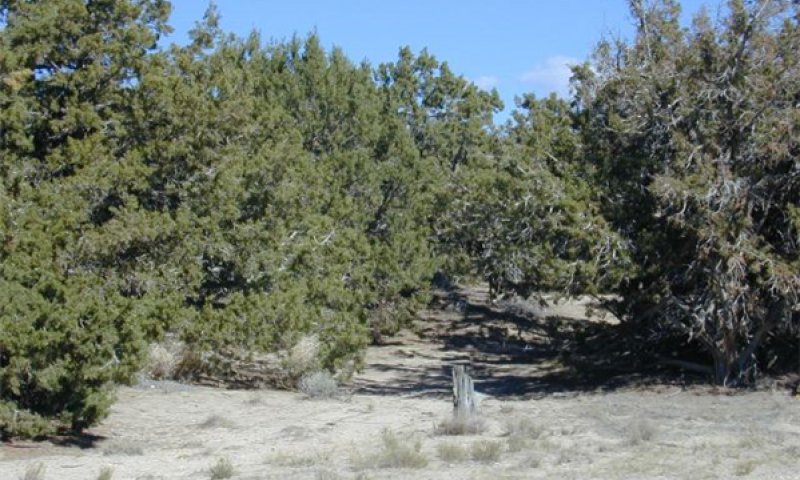
Figure 8. Community Phase 3.2, photo 2: Utah juniper 46%. Jericho soil component, NAD 27 12 382927E 4402403N. Photo Taken 10/8/2002 Utah GAP project, site UT100802MD01.
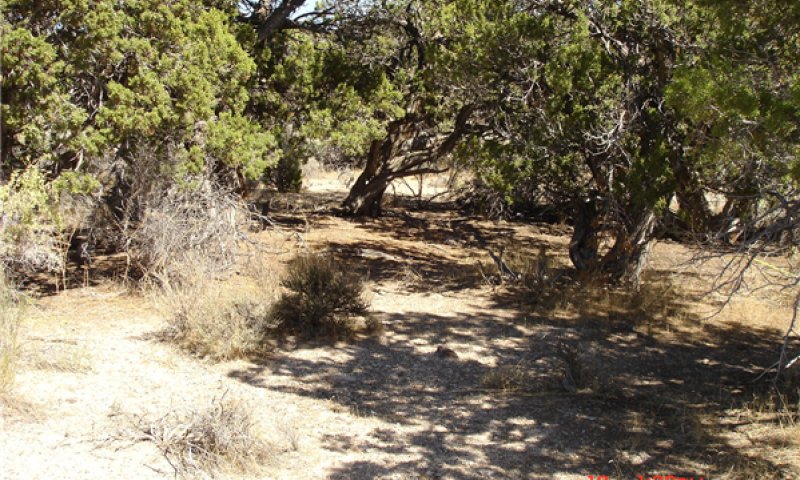
Figure 9. Community Phase 3.2, photo 1: Utah Juniper; Black sagebrush; annual weeds. Photo taken by Keith Wadman 9/18/2006, T11S, R6W, S25, NW1/4.
Mature Utah juniper dominates the overstory, immature juniper dominate the understory. Black sagebrush and other shrubs are much reduced in the community. Winterfat is mostly dead. Remaining perennial herbaceous vegetation is rare or missing and is found only in protected locations under shrubs. Invasive, non-native grasses and weeds including cheatgrass, annual mustards, and redstem storksbill dominate the understory. Fire frequency is 100 to 300 years. Catastrophic fire is required to remove the closed stand of Utah juniper.
Pathway 3.1a
Community 3.1 to 3.2
Long-term improper grazing (including season long, overstocking, wrong season, etc.) and/or drought remove annual and perennial fine fuels from the site lessening the potential for fire to occur. Fire frequency is greater than 100 years.
Pathway 3.2a
Community 3.2 to 3.1
Grazing management improves and site degradation slows or reverses. Native perennial vegetation begins to recover. Fire frequency remains well beyond normal for the community. Fire frequency is more than 100 years.
State 4
Sprouting Shrubs/Invasive Annual State
The Sprouting Shrubs/Invasive Annual State occurs when the native herbaceous understory is removed and replaced with non-native invasive species generally through long term grazing and fire. Sprouting shrubs dominated the shrub layer and annual invasive species dominate the herbaceous layer. There are two community phases described in this state.
Community 4.1
Yellow rabbitbrush/broom snakeweed/invasive annuals/native perennials
Yellow rabbitbrush dominates the overstory community. Smooth horsebrush can also be plentiful if conditions are right. Fire tolerant shrubs persist as dominants in this community with fire periods reoccurring at intervals of 10 to 30 years. Broom snakeweed may be a dominant episodic species when conditions are favorable. Palatable native bunchgrasses are significantly reduced; purple threeawn and sand dropseed increase; invasive annuals including cheatgrass, annual mustards, and redstem storksbill dominate the understory.
Community 4.2
Yellow rabbitbrush/broom snakeweed/invasive annuals
Yellow rabbitbrush dominates the overstory community. Smooth horsebrush can be plentiful if conditions are right. Fire tolerant shrubs persist as dominants in this community with fire periods reoccurring at intervals of 5 to 30 years. Broom snakeweed may be a dominant episodic species when conditions are favorable. Only remnant native grasses remain; invasive annuals including cheatgrass, annual mustards, and redstem storksbill dominate the understory.
Pathway 4.1a
Community 4.1 to 4.2
Sustained, long-term improper grazing (including season long, overstocking, wrong season, etc.) and/or drought reduce perennial fine fuels from the site. Fire removes black sagebrush and any Utah juniper or Wyoming big sagebrush occupying site. Yellow rabbitbrush and Broom snakeweed dominate.
Pathway 4.2a
Community 4.2 to 4.1
Site is properly grazed for an extended period of time. Native perennial vegetation is recovering. Fire frequency is 1 to 30 years.
State 5
Seeded State
The Seeded State occurs when a seeding takes place on the site. Typical species include both native and non-native bunchgrasses and forbs. Shrubs and trees are often reduced in this state. There are two community phases described in this state.
Community 5.1
Native and Introduced perennial herbacous
Utah juniper and various shrubs are reduced but may occupy a portion of the site because of inadequate kill or regeneration. This community may be allowed to regenerate naturally if sufficient desirable grasses are available or be seeded to rangeland species that may be composed of introduced, native or combinations of these species. Invasive annual grasses and weedy forb species, primarily cheatgrass and various annual mustards, may be present in the seeding. Healthy range seedings are resistant to wildfire wildfire because the perennial bunchgrasses and forbs in the seeding can outcompete the invasive annual species, reducing fine fuels and fire.
Community 5.2
Native shrubs/Invasive annuals/Introduced perennials
Utah juniper and various shrubs are reduced but may be reoccupying the site because of inadequate kill or regeneration. Native grasses or rangeland seeding fail to establish or are heavily overgrazed after establishment. This community is primarily composed of invasive annual grasses and weedy forb species, mostly cheatgrass and various annual mustards. Broom snakeweed may be an episodic dominant species when conditions are favorable.
Pathway 5.1a
Community 5.1 to 5.2
Natural herbaceous regeneration or range seeding is not well established; continued improper grazing (including season long, overstocking, wrong season, etc.); and/or drought reduces any perennial grasses established. Highly combustible fine fuels from invasive annuals increase the chances of fire burning through the seeding.
Pathway 5.2a
Community 5.2 to 5.1
Site receives excellent grazing management over a long period of time. Highly combustible fine fuels from invasive annuals continue to dominate the community resulting in increased chance for fire. Natural herbaceous regeneration or range seeding very slowly recovers.
Transition T1a
State 1 to 2
Introduction of non-native annual species.
Transition T2a
State 2 to 3
Disturbance: season, etc.) and/or prolonged drought; lengthening of fire period to over 100 years resulting in a dense tree/shrub overstory, reduction of native perennial vegetation.
Transition T2b
State 2 to 4
Long-term improper grazing (including season long, overstocking, wrong season, etc.) and/or prolonged drought; shortened fire frequency allows site to be dominated by sprouting shrubs, including Yellow rabbitbrush and broom snakeweed; significant reduction of perennial bunchgrass species. Highly combustible fine fuels from invasive annuals dominate the community. Fire frequency is typically 10 to 30 years.
Transition T3a
State 3 to 4
Long-term improper grazing (including season long, overstocking, wrong season, etc.) and/or prolonged drought; shortened fire frequency allows site to be dominated by sprouting shrubs, including Yellow rabbitbrush and Broom snakeweed; significant reduction of perennial bunchgrass species. Highly combustible fine fuels from invasive annuals dominate the community. Fire frequency is typically 10 to 30 years.
Transition T3b
State 3 to 5
Mechanical chaining of Utah juniper where present and/or chemical treatment of undesirable shrubs with regeneration of native herbaceous species, or seeding of introduced, native or combination rangeland grass and forb species.
Transition T4a
State 4 to 5
Mechanical chaining of Utah juniper where present and/or chemical treatment of undesirable shrubs with regeneration of native herbaceous species, or seeding of introduced, native or combination rangeland grass and forb species.