

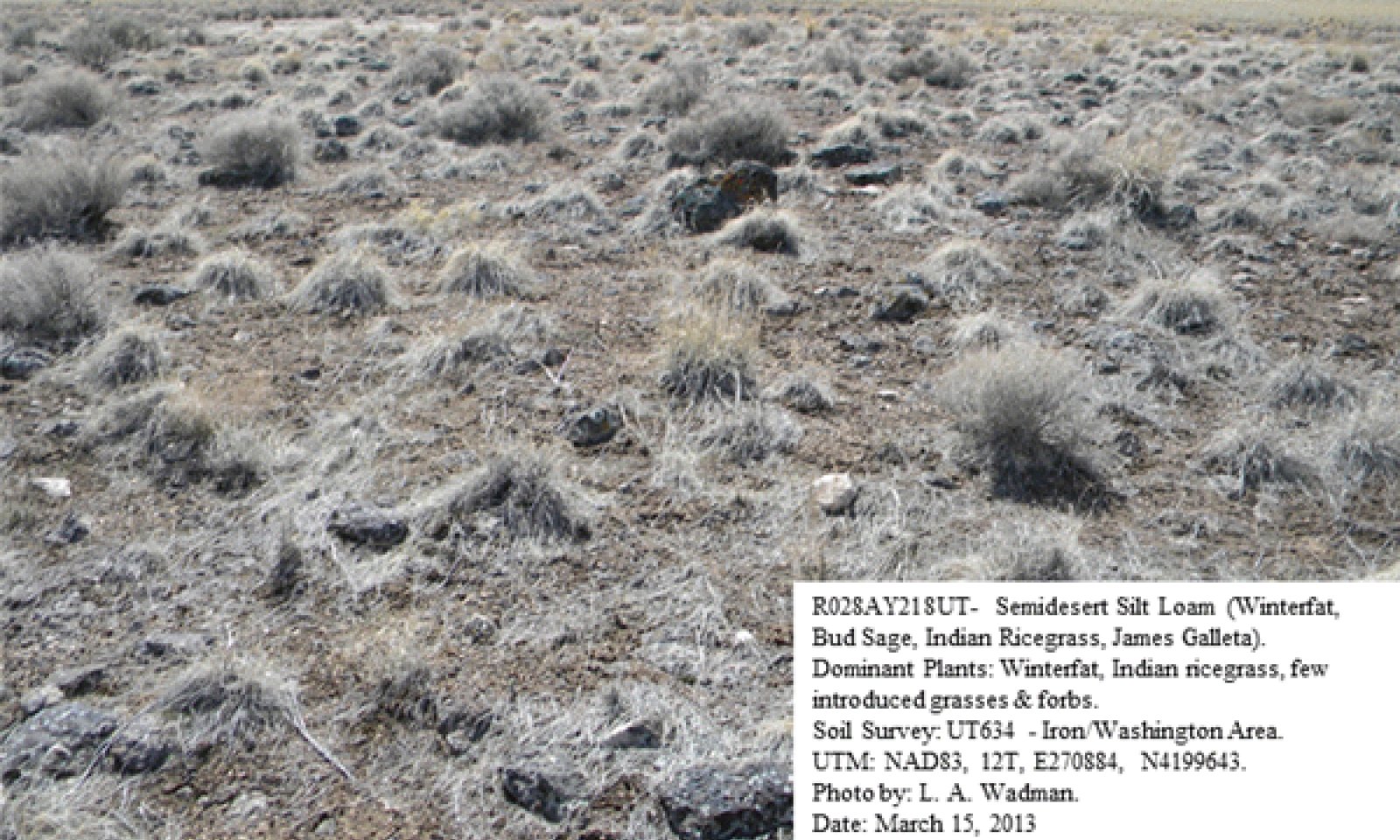
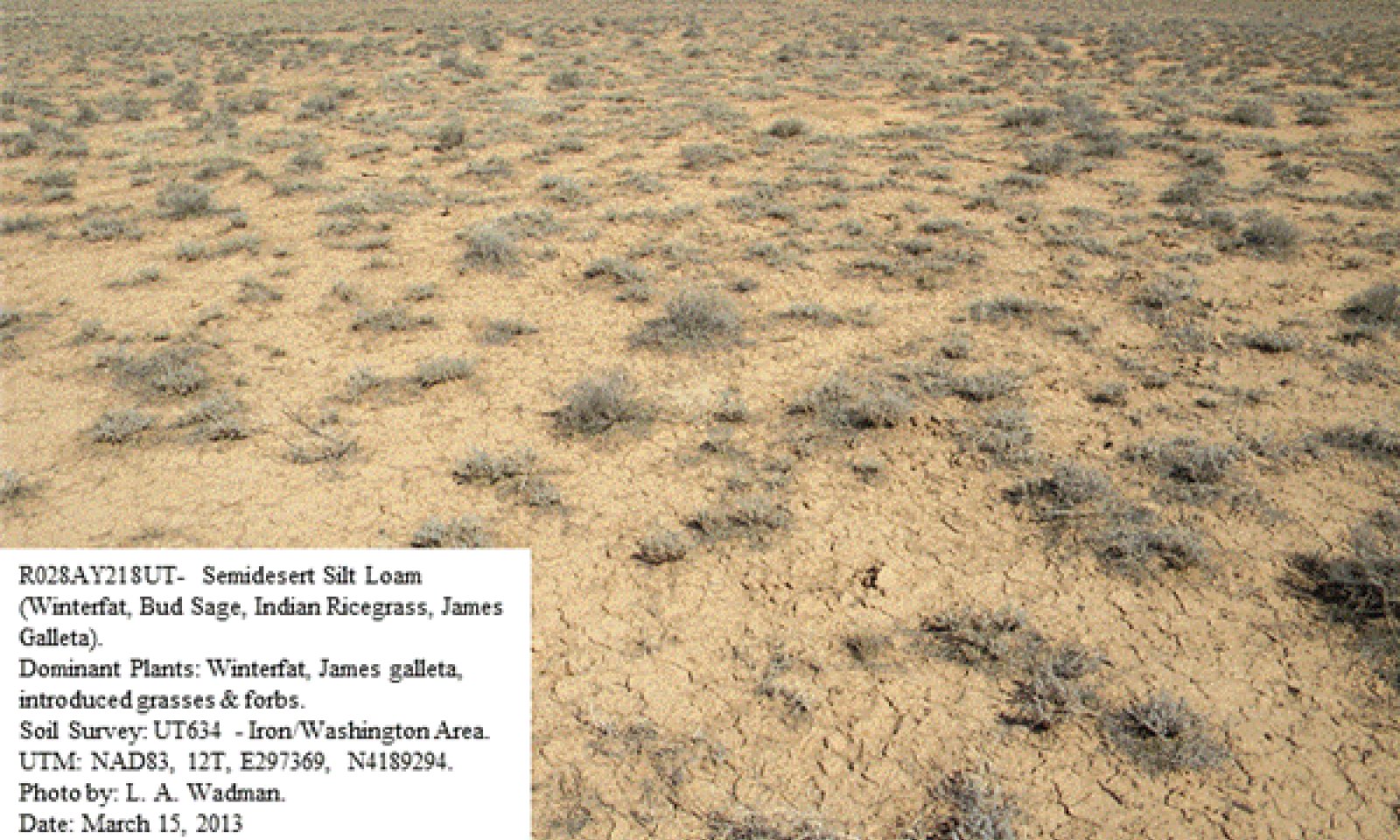
Semidesert Silt Loam (Winterfat)

Scenario model
Current ecosystem state
Select a state
Management practices/drivers
Select a transition or restoration pathway
- Transition T1A More details
- Transition T2A More details
- Transition T2B More details
- Transition T3A More details
-
No transition or restoration pathway between the selected states has been described
Target ecosystem state
Select a state
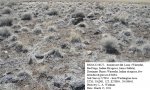
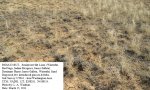
Description
The Reference State describes the various biotic communities that are expected to be found on this ecological site under natural conditions. The Reference State is dominated by a shrub layer composed mainly of winterfat and bud sagebrush. Four-wing saltbush, shadscale, and spiny horsebrush are other common shrub species. Indian ricegrass is the dominant herbaceous species with James' galleta, bottlebrush squirreltail, and western wheatgrass commonly occurring. Other native grasses, forbs, and shrubs will often produce a significant portion of the vegetative composition in the plant community.
The Reference State is self-sustaining and resistant to change due to a natural resilience to its natural disturbances. The primary natural disturbance mechanisms are wildlife population densities which can affect the shrub layer composition, weather fluctuations, and fire period.
Indicators: These communities are dominated by winterfat, bud sagebrush, and Indian ricegrass. The density of the shrub canopy helps determine the amount and composition of the other native species present in the community.
Feedbacks: Natural fluctuations in weather patterns that allow for a self-sustaining shrub and native grass community. Prolonged drought, an increase in fire frequency, or other disturbances may allow for the establishment of invasive species.
At-risk Community Phase: All communities are at risk when native plants are stressed and conditions are created that may allow invasive plants to establish.
Trigger: The establishment of invasive plant species.
Submodel
Description
The Current Potential State is similar to the Reference Sate except that non-native species are now present. This state describes the plant communities that may or have become established on this ecological site under various successional sequences and disturbance conditions. This state typically has a well developed shrub layer with winterfat often dominating. Four-wing saltbush, bud sagebrush, and shadscale are other common shrub species. Indian ricegrass is typically the most dominant herbaceous species with James' galleta, western wheatgrass, and other perennial grasses and forbs. Sand dropseed and purple threeawn may be increasing where conditions permit. Cheatgrass, Halogeton, Russian thistle, various mustard species, and other non-native species are present on the site and under certain circumstances and may visually dominate the sites aspect.
The primary disturbance mechanisms are the shrub layer density, the amount of invasive species present, weather fluctuations, and fire. The Current Potential State is still self-sustaining but may be losing its resistance to change due to the impact of disturbances with less resilience following those disturbances.
Current Potential State: Plant communities influenced by shrub canopy density, long term weather fluctuations, and periodic fire. Invasive species are present in various amounts.
Indicators: A community dominated by winterfat, four-wing saltbush, and Indian ricegrass. The health and density of the shrub canopy determines the amount and composition of the other native and introduced grasses and forbs that may be present.
Feedbacks: Natural fluctuations in weather patterns that allow for a self sustaining shrub and native grass community. Prolonged drought, more frequent fires, and/or other disturbances that may allow for the increase of invasive species.
At-risk Community Phase: All communities are at risk when native plants are stressed and nutrients become available for invasive plants to increase.
Trigger: A reduction of perennial grass and forb species combined with an increase of invasive plant species.
Submodel
Description
The Shrub State consists of one community phase. The site has crossed a biotic threshold and site processes are being controlled by shrubs. Bare ground has increased.
Submodel
Mechanism
This transitional pathway occurs when any combination of improper livestock grazing, prolonged drought, or other disturbance causes the perennial herbaceous community to become significantly reduced allowing non-native species such as cheatgrass, Halogeton, Russian thistle and other invasive weeds to become established. Broom snakeweed may also increase during this time. Once invasive species occupy the site, a threshold has been crossed. Cheatgrass, however, has been known to become established in healthy communities on this site.
Mechanism
Inappropriate grazing management, with the presence of non-native species
Mechanism
Catastrophic fire and/or multiple fires, inappropriate grazing management and/or soil disturbing treatments.
Model keys
Briefcase
Add ecological sites and Major Land Resource Areas to your briefcase by clicking on the briefcase ( ) icon wherever it occurs. Drag and drop items to reorder. Cookies are used to store briefcase items between browsing sessions. Because of this, the number of items that can be added to your briefcase is limited, and briefcase items added on one device and browser cannot be accessed from another device or browser. Users who do not wish to place cookies on their devices should not use the briefcase tool. Briefcase cookies serve no other purpose than described here and are deleted whenever browsing history is cleared.
Ecological sites
Major Land Resource Areas


The Ecosystem Dynamics Interpretive Tool is an information system framework developed by the USDA-ARS Jornada Experimental Range, USDA Natural Resources Conservation Service, and New Mexico State University.