

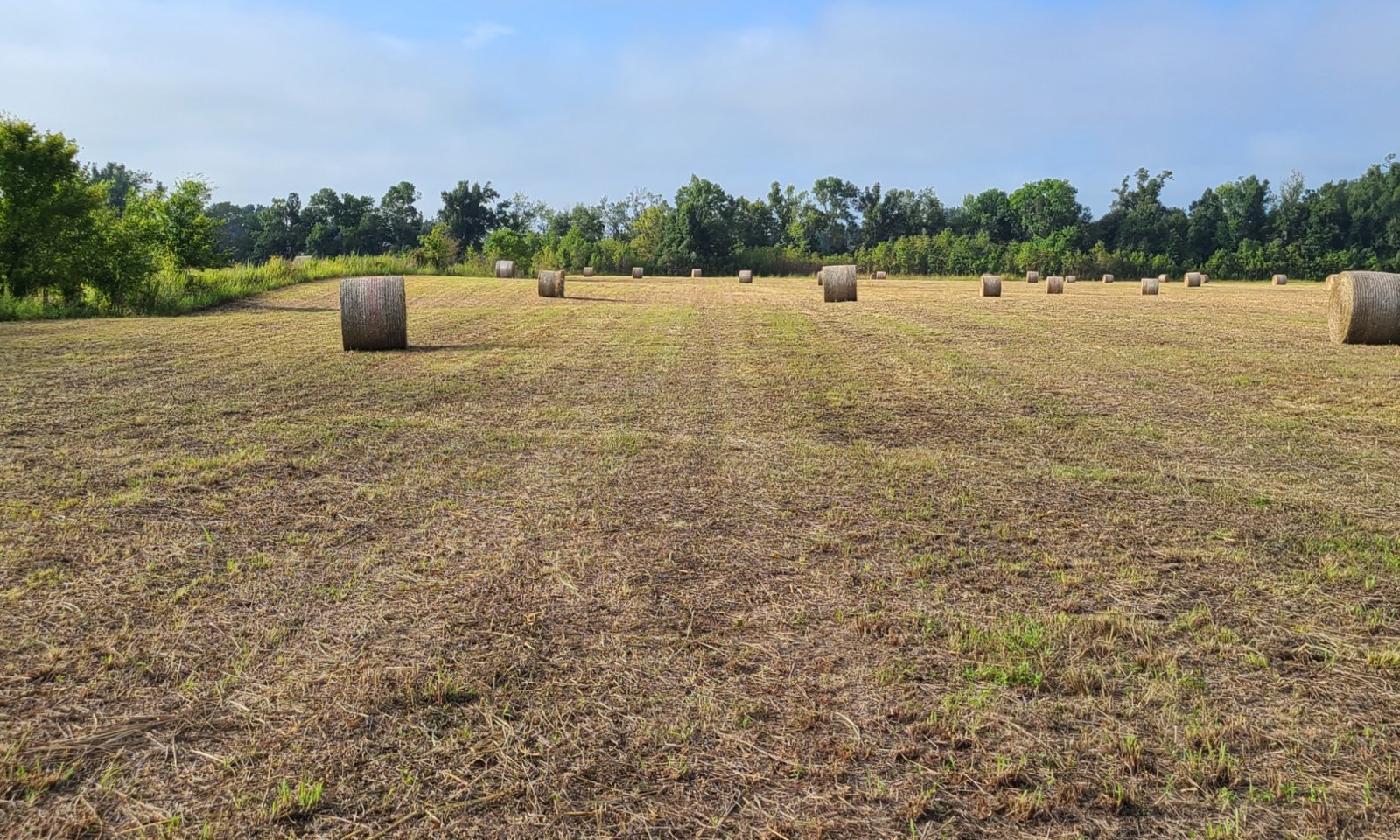
Tensas Basin - Poorly Drained Ridge and Swale Complex

Scenario model
Current ecosystem state
Select a state
Management practices/drivers
Select a transition or restoration pathway
-
Transition T1A
Wind or water force causing canopy gaps.
More details -
Transition T*-3
Avulsion - Catastrophic event river change in channel location to new run.
More details -
Transition T1B
Clear and established the desired community
More details -
Transition T1B
Clear and established the desired community
More details -
Transition T1C
Manipulation of species composition.
More details -
Transition T2A
Regeneration of hardwood species.
More details -
Transition T*-3
Avulsion - Catastrophic event river change in channel location to new run.
More details -
Transition T*-5
Establish desired forage species and manage for grazing.
More details -
Transition T*-6
Plant or natural regeneration of woody species.
More details -
Transition T*-4
Establish and manage crop rotation. (Leveled for drainage & irrigation)
More details -
Transition T*-6
Plant or natural regeneration of woody species.
More details -
Transition T6A
Heavy brush management.
More details -
Transition T6B
Manage succession for historic community.
More details -
Transition T8A
Clear and established the desired community.
More details -
Transition T8A
Clear and established the desired community.
More details -
No transition or restoration pathway between the selected states has been described
Target ecosystem state
Select a state
Description
Mixed Bottomland Hardwood
Submodel
Description
This state consists of forest canopy openings that are created by catastrophic disturbances, allowing sunlight to reach understory strata and ground surfaces. Depending on local conditions and disturbance regime and intensity, a continuum or range of successional stages and community structure (physiognomy) is represented. Provisionally, this state includes seral stages ranging from recent disturbances that consist mainly of sparse herbaceous cover over mostly bare soil to the regeneration of woody species among a dense herbaceous cover (early stand initiation stage) to the initial stem exclusion stage where woody growth overtops and shades out the herbaceous stratum. In future ecological site development efforts, multiple community phases that describe the composition and progression from one stage to the next may be warranted for specifying management strategies and actions.
Submodel
Description
Catastrophic river change in channel (AVULSION)
Submodel
Description
This site is generally considered not suited for crop production due to flooding and wetness. When the site hydrology has been altered mechanically by the construction of levees, water control structures, and potentially pumps, crop species may be established and the site utilized for production. Maintenance of the hydrologic control must be continued to maintain production, and if control is abandoned or lost, site conditions may return to excessively wet conditions, which will prevent utilization of the land for crop production. Conditions, even with control, may only allow production on an irregular basis.
This state represents a crop production field. Annual plantings for forage production would also be included in this phase, which may include cool season annual grasses and legumes and warm season forage species. Vegetable crops are grown on this site and are generally on a small scale. Corn, and soybeans are dominant crops and can be planted in fields with adequate management. Wheat may be included in the rotation or as a standalone crop. Other row crop species have been produced on these sites. Often two or more crops will be grown in a multiyear rotation, this breaks pest cycles and some crops produce higher amounts of residue, which is left on the soil to improve soil health. Maintenance of monoculture crop stands also requires the control of unwanted species, which will require Pest Management and Nutrient Management to maintain the needed fertility for production of the desired species. Refer to E-Field Office Technical Guide and the local NRCS Field Office for management assistance.
Submodel
Description
This site is generally considered not suited for grazing due to flooding and wetness. When the site hydrology has been altered mechanically by the construction of levees, water control structures, and potentially pumps, forage species may be established and the site utilized for grazing. Maintenance of the hydrologic control must be continued to maintain production and if control is abandoned or lost, site conditions may return to excessively wet conditions which will prevent utilization of the land for forage production. Conditions even with control may only allow forage production on an irregular basis. Additionally, adjacent higher elevation areas or protected areas may be needed for the storage of harvested forage or holding of livestock when wet or flooded conditions occur. Some forage operations on this site may experience none to multiple extreme wetness events in a single year that will require preplanning and resources to meet the needs of the livestock.
This state is characterized by a monoculture or a mixture of forage species planted or allowed to establish from naturalized species managed for forage production or as herbaceous ground cover.
Submodel
Description
Regenerated bottomland hardwood community.
Submodel
Mechanism
Avulsion - Catastrophic event river change in channel location to new run.
Mechanism
Avulsion - Catastrophic event river change in channel location to new run.
Mechanism
Establish and manage crop rotation. (Leveled for drainage & irrigation)
Model keys
Briefcase
Add ecological sites and Major Land Resource Areas to your briefcase by clicking on the briefcase ( ) icon wherever it occurs. Drag and drop items to reorder. Cookies are used to store briefcase items between browsing sessions. Because of this, the number of items that can be added to your briefcase is limited, and briefcase items added on one device and browser cannot be accessed from another device or browser. Users who do not wish to place cookies on their devices should not use the briefcase tool. Briefcase cookies serve no other purpose than described here and are deleted whenever browsing history is cleared.
Ecological sites
Major Land Resource Areas


The Ecosystem Dynamics Interpretive Tool is an information system framework developed by the USDA-ARS Jornada Experimental Range, USDA Natural Resources Conservation Service, and New Mexico State University.