

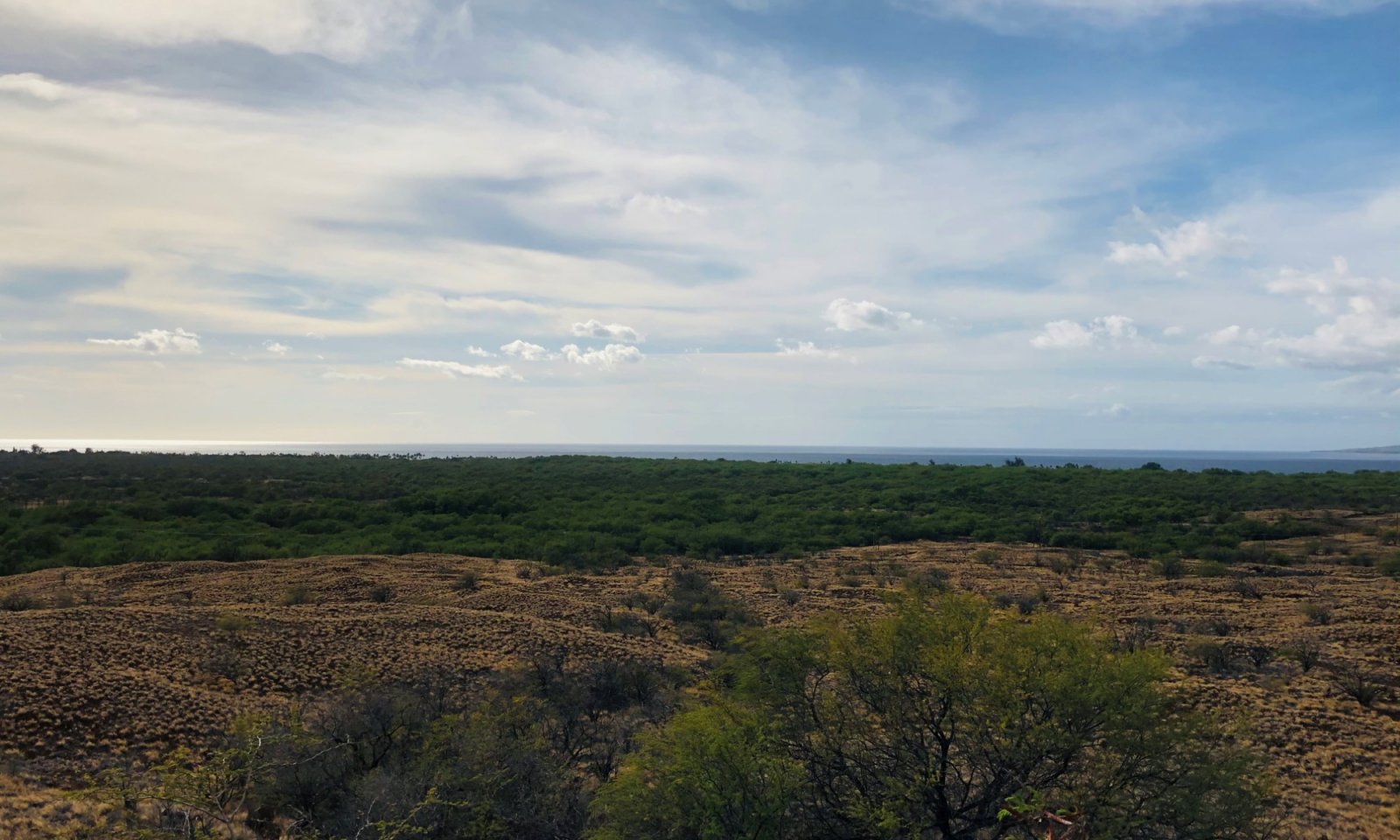
Alluvial Woodland (Kiawe/Prosopis pallida)

Scenario model
Current ecosystem state
Select a state
Management practices/drivers
Select a transition or restoration pathway
-
Restoration pathway R1A
State 1 Reference can be restored to State 2 Cleared through disturbances such as fire, mechanical clearing, or herbicidal control of kiawe. Additional brush management strategies to avoid introduction of invasive shrubs (lantana, klu, koa-haole, etc) will be required. Once cleared, perennial grasses and forbs reassume dominance where they have regained access to soil moisture, nutrients and light.
More details
Fire: While fire will kill kiawe, the sparse grass and understory is not expected to carry fire that would result in stand replacement. Moreover, prescribed burning is typically not done in Hawaii due to the level of risk to relict native ecosystems and enjoined or embedded development.
Mechanical Control: Some mechanical techniques that have been employed successfully include blade plowing, chain pulling, bulldozing, and stick raking (Gallaher and Merlin 2010). These methods can create high levels of ground disturbance and soil compaction.
Herbicidal Control: Basal bark and cutstump application have been employed in Hawaii. Although this method works well for isolated individuals, it is both cost- and time-prohibitive for large areas with dense stands. -
Restoration pathway T2A
State 2 Cleared transitions to State 1 Reference in the absence of disturbance such as fire or land clearing activities.
More details -
Restoration pathway R2A
State 2 Cleared may be restorable to a facsimile of State 3 Native Savanna. Measures (fencing, animal control) must be implemented to exclude all domestic and feral ungulates from the site. A firebreak must be created and maintained around the fence line if the site adjoins grasslands. Buffelgrass and other non-native vegetation must be killed, followed by plantings of native trees, shrubs, and vines. Supplemental irrigation will be necessary in the early stages of restoration.
More details -
Transition T3A
State 3 Native Savanna transitions to State 2 Cleared when cleared by fire, long-term ungulate disturbance, herbicidal control, or by mechanical means. Once cleared, perennial grasses and forbs reassume dominance where they have regained access to soil moisture, nutrients and light.
More details
Fire: While fire will kill kiawe, the sparse grass and forb understory of the Native Savanna State would not be expected to carry fire that would result in stand replacement. Moreover, prescribed burning is typically not done in Hawaii due to the level of risk to other relict native ecosystems and enjoined or embedded development.
Long-Term Systematic Herbivory: With continued, long-term systematic herbivory and browsing by goats, nearly all native grass and forbs (forages) and regenerating shrub and tree seedlings are removed allowing buffelgrass to resume dominance.
Herbicidal Control: Basal bark and cutstump application have been employed to control trees in Hawaii. Although this method works well for isolated individuals, it is both cost- and time-prohibitive for large areas with dense stands.
Mechanical Control: Some mechanical techniques to control unwanted trees and shrubs that have been employed successfully in Hawaii include blade plowing, chain pulling, bulldozing, and stick raking (Gallaher and Merlin 2010). These methods can create high levels of ground disturbance and soil compaction. -
No transition or restoration pathway between the selected states has been described
Target ecosystem state
Select a state
Description
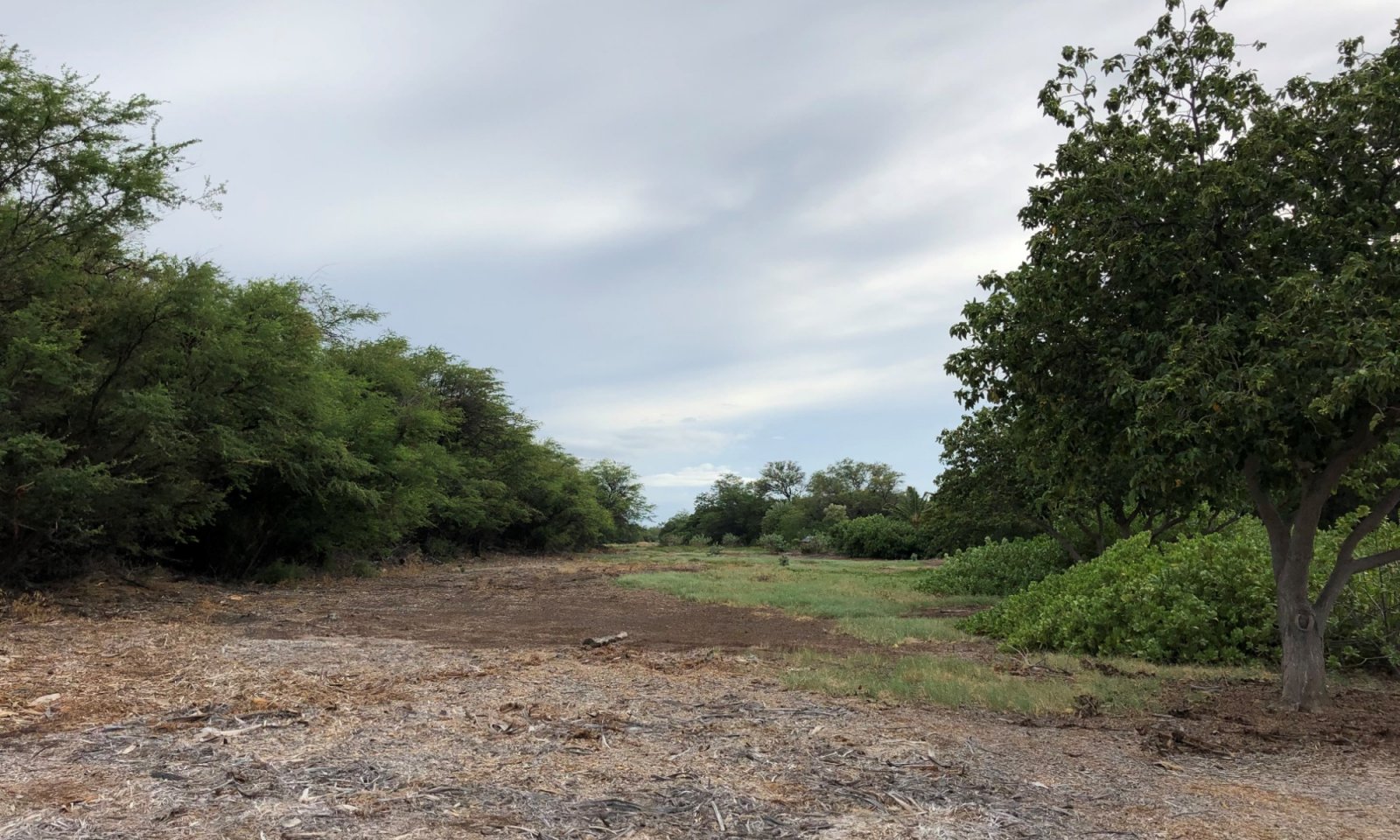
This state consists of one community phase. It occurs when the area has not been cleared mechanically and if wildfire has not occurred for a long time, allowing kiawe to increase in density and stature to a level at which understory vegetation becomes sparse. The dense kiawe woodlands have very little understory vegetation. While the presence of burnable fuels is low, it is conceivable that fire could carry through the sparse understory and litter layer to some extent. As such, State 1 Reference is likely to maintain itself unless cleared mechanically.
Submodel
Description
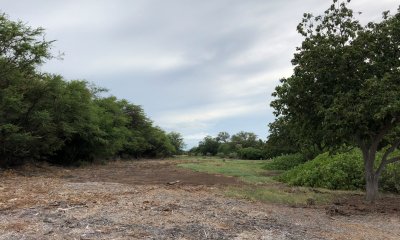
This state consists of one community phase dominated by introduced grasses. Tree canopy cover varies from 0 to about 60 percent. In the absence of clearing activities or wildfire, this state will transition to State 1 Reference, in which tree cover increases and production and cover of grass, forbs, and shrubs is reduced. Gradual accumulation of fine fuels increases the possibility of wildfire. This can maintain an open grassland with little tree overstory but presents a fire threat to developed areas nearby and likelihood of eroded soil entering the nearby ocean.
Submodel
Description
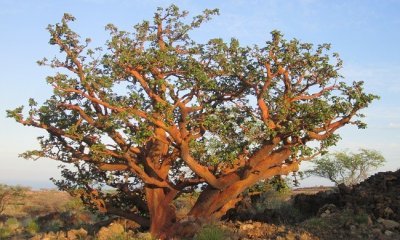
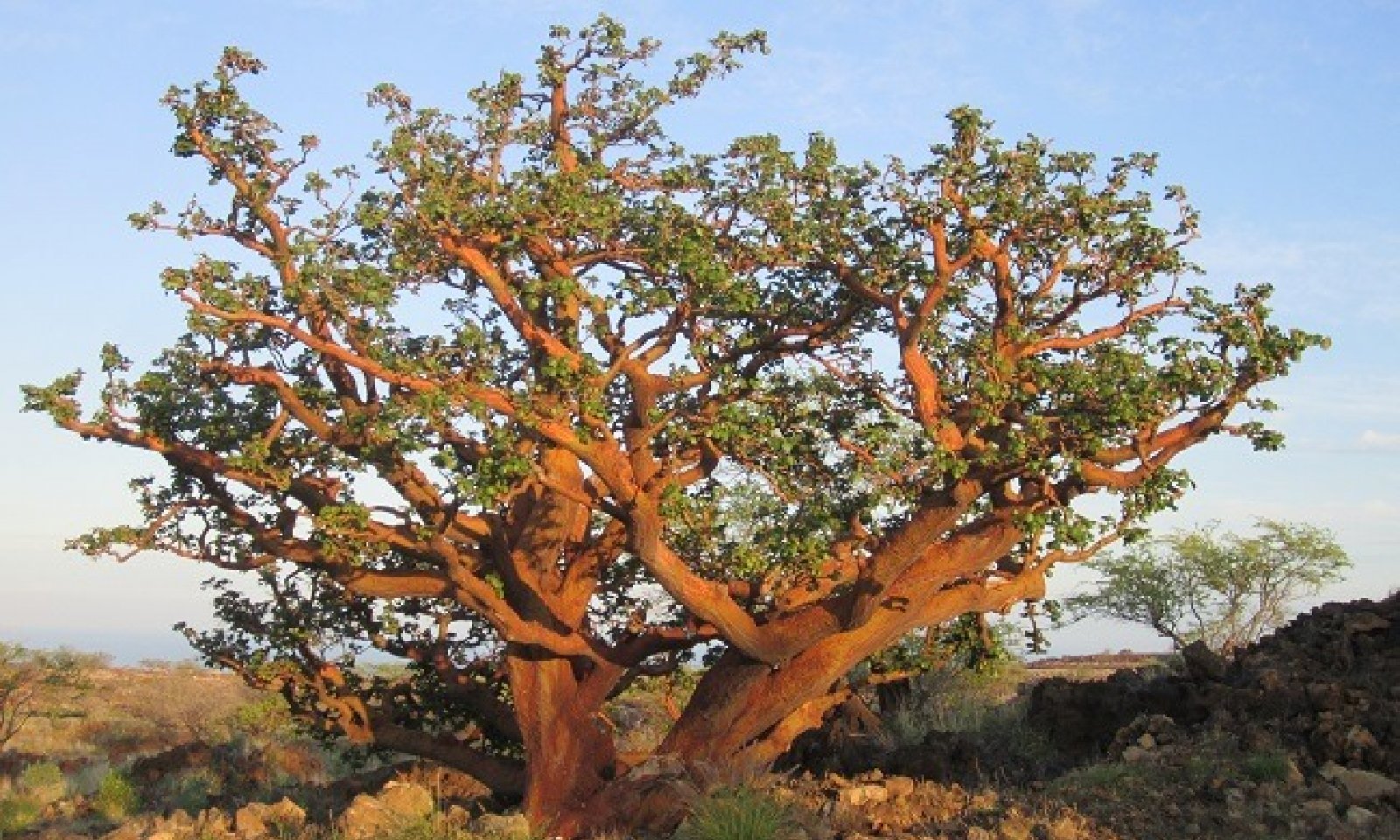
This state consists of one community phase. Intact examples of this community no longer exist. This description is compiled from field observations of remnant plants, environmental ranges of native species that plausibly could occur, and observations on other ecological sites. Species are those that can grow near the ocean in very dry, warm conditions. They probably grew as an open savanna.
Submodel
Mechanism
State 1 Reference can be restored to State 2 Cleared through disturbances such as fire, mechanical clearing, or herbicidal control of kiawe. Additional brush management strategies to avoid introduction of invasive shrubs (lantana, klu, koa-haole, etc) will be required. Once cleared, perennial grasses and forbs reassume dominance where they have regained access to soil moisture, nutrients and light.
Fire: While fire will kill kiawe, the sparse grass and understory is not expected to carry fire that would result in stand replacement.
Mechanical Control: Some mechanical techniques that have been employed successfully include blade plowing, chain pulling, bulldozing, and stick raking (Gallaher and Merlin 2010). These methods can create high levels of ground disturbance and soil compaction.
Herbicidal Control: Basal bark and cutstump application have been employed in Hawaii. Although this method works well for isolated individuals, it is both cost- and time-prohibitive for large areas with dense stands.
Relevant conservation practices
| Practice | External resources |
|---|---|
|
Brush Management |
|
|
Land Clearing |
Mechanism
State 2 Cleared transitions to State 1 Reference in the absence of disturbance such as fire or land clearing activities.
Mechanism
State 2 Cleared may be restorable to a facsimile of State 3 Native Savanna. Measures (fencing, animal control) must be implemented to exclude all domestic and feral ungulates from the site. A firebreak must be created and maintained around the fence line if the site adjoins grasslands. Buffelgrass and other non-native vegetation must be killed, followed by plantings of native trees, shrubs, and vines. Supplemental irrigation will be necessary in the early stages of restoration.
Relevant conservation practices
| Practice | External resources |
|---|---|
|
Fence |
|
|
Firebreak |
|
|
Integrated Pest Management (IPM) |
|
|
Restoration and Management of Rare and Declining Habitats |
|
|
Native Plant Community Restoration and Management |
|
|
Invasive Plant Species Control |
Mechanism
State 3 Native Savanna transitions to State 2 Cleared when cleared by fire, long-term ungulate disturbance, herbicidal control, or by mechanical means. Once cleared, perennial grasses and forbs reassume dominance where they have regained access to soil moisture, nutrients and light.
Fire: While fire will kill kiawe, the sparse grass and forb understory of the Native Savanna State would not be expected to carry fire that would result in stand replacement.
Long-Term Systematic Herbivory: With continued, long-term systematic herbivory and browsing by goats, nearly all native grass and forbs (forages) and regenerating shrub and tree seedlings are removed allowing buffelgrass to resume dominance.
Herbicidal Control: Basal bark and cutstump application have been employed to control trees in Hawaii. Although this method works well for isolated individuals, it is both cost- and time-prohibitive for large areas with dense stands.
Mechanical Control: Some mechanical techniques to control unwanted trees and shrubs that have been employed successfully in Hawaii include blade plowing, chain pulling, bulldozing, and stick raking (Gallaher and Merlin 2010). These methods can create high levels of ground disturbance and soil compaction.
Relevant conservation practices
| Practice | External resources |
|---|---|
|
Brush Management |
|
|
Land Clearing |
Model keys
Briefcase
Add ecological sites and Major Land Resource Areas to your briefcase by clicking on the briefcase ( ) icon wherever it occurs. Drag and drop items to reorder. Cookies are used to store briefcase items between browsing sessions. Because of this, the number of items that can be added to your briefcase is limited, and briefcase items added on one device and browser cannot be accessed from another device or browser. Users who do not wish to place cookies on their devices should not use the briefcase tool. Briefcase cookies serve no other purpose than described here and are deleted whenever browsing history is cleared.
Ecological sites
Major Land Resource Areas


The Ecosystem Dynamics Interpretive Tool is an information system framework developed by the USDA-ARS Jornada Experimental Range, USDA Natural Resources Conservation Service, and New Mexico State University.