

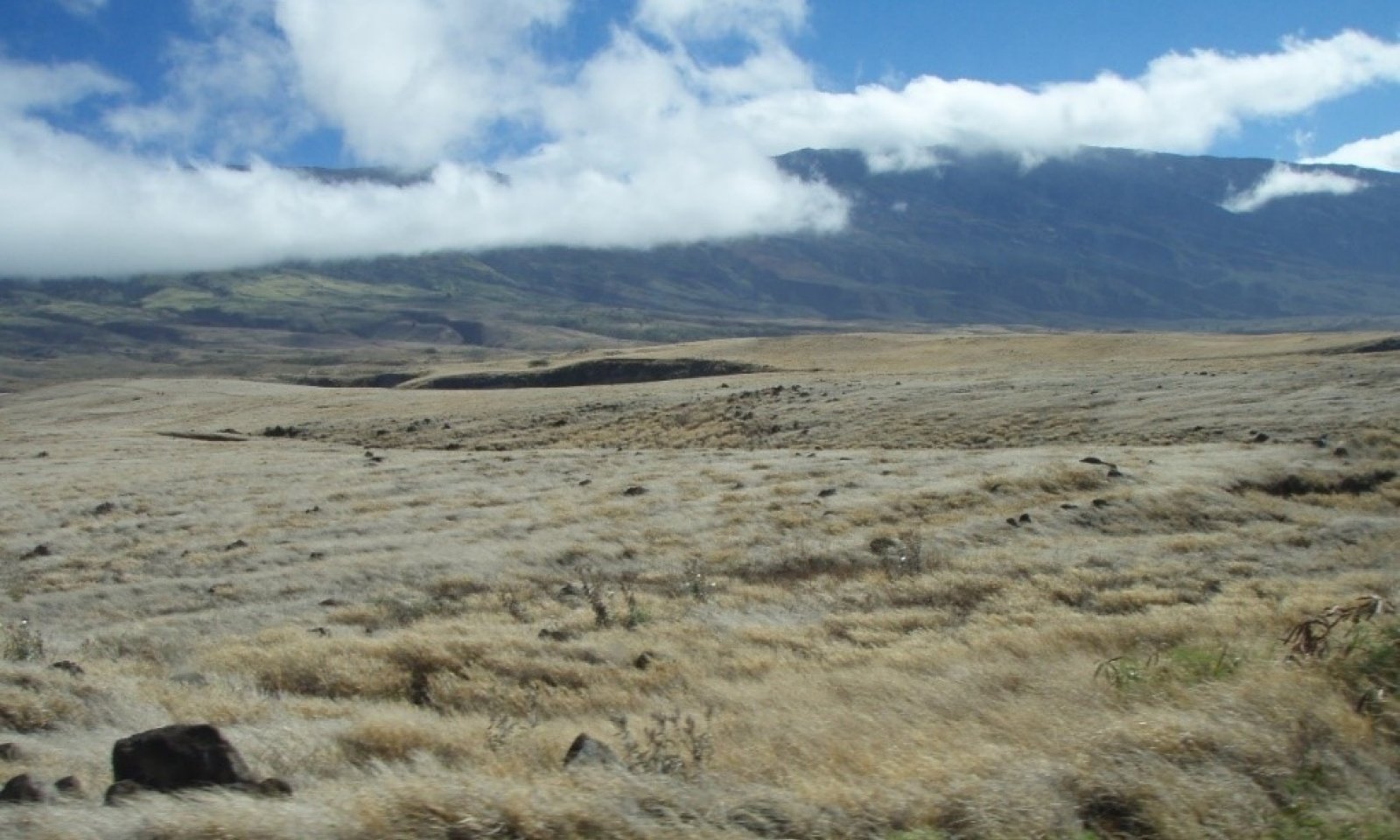
Rocky Isohyperthermic Torric Naturalized Grassland Kiawe/uhaloa/buffelgrass (Prosopis pallida/Waltheria indica/Pennisetum ciliare)

Scenario model
Current ecosystem state
Select a state
Management practices/drivers
Select a transition or restoration pathway
-
Transition T1A
State 1 Reference transitions to State 2 Kiawe-Invaded in the absence of disturbance such as fire or brush management.
More details -
Restoration pathway R1A
State 1 Reference can be restored and maintained to State 3 Native Savanna with significant management inputs. The site must be fenced or other measures must be taken to exclude all domestic and feral ungulates. A firebreak must be established and maintained around the fence line by grazing or mowing. Buffelgrass and other non-native vegetation must be killed, followed by plantings of native trees, shrubs, and vines. Supplemental irrigation may be necessary in the early stages of restoration.
More details -
Transition T1B
State 1 Reference transitions and is maintained to State 4 Toxic/Unpalatable Forb primarily by constant heavy browsing and grazing by feral goats and on Maui and Molokai, deer, such that nearly all perennial grass and forb (forages) are removed. To avoid this transition, management and significant reduction in the numbers of the feral animals in the area is necessary. This may involve fencing, trapping, and other herd reduction methods.
More details -
Restoration pathway R2A
State 2 Kiawe-Invaded can be restored to State 1 Reference when kiawe are cleared by fire, herbicidal application, or mechanical means. While fire will kill kiawe, prescribed burning is typically not done in Hawaii due to the level of risk to relict native ecosystems and enjoined or embedded development. Once cleared, perennial grasses and forbs reassume dominance where they have regained access to soil moisture, nutrients and light. Additional brush management strategies to avoid the proliferation of invasive shrubs (lantana, klu, koa-haole, etc) will be required and prescribed grazing strategies allowing for sufficient rest of perennial grasses and forbs will be needed.
More details -
Transition T3A
State 3 Native Savanna transitions to State 1 Reference when it is cleared by fire, long-term ungulate disturbance, or mechanical means. Once cleared, desired perennial grass and forbs (typically naturalized forage species) are then re-established. While fire will kill most native vegetation, prescribed burning is typically not done in Hawaii due to the level of risk to other enjoined or embedded relict native ecosystems and development.
More details -
Restoration pathway R4A
State 4 Toxic/Unpalatable Forb is restored to State 1 Reference with significant management inputs. Management and significant reduction in the numbers of the feral animals in the area is necessary. This may involve fencing, trapping, and other herd reduction methods. The soil seed bank will probably bring back a variety of plant species in a favorable weather year but seeding of desired forages or native plants is recommended, along with continuous weed and brush control as necessary. Sites that are severely eroded may require additional management inputs and conservation practices.
More details -
No transition or restoration pathway between the selected states has been described
Target ecosystem state
Select a state
Description
State 1 Reference consists of three plant community phases dominated by introduced grasses with less than 25 percent canopy cover of introduced trees. The transition from one plant community within the state to another is often related to the dynamics of fire, grazing, and brush management.
Submodel
Description
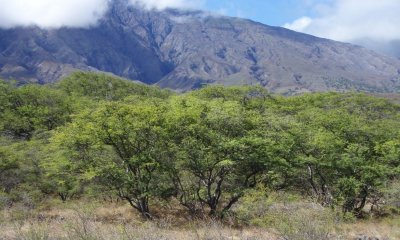
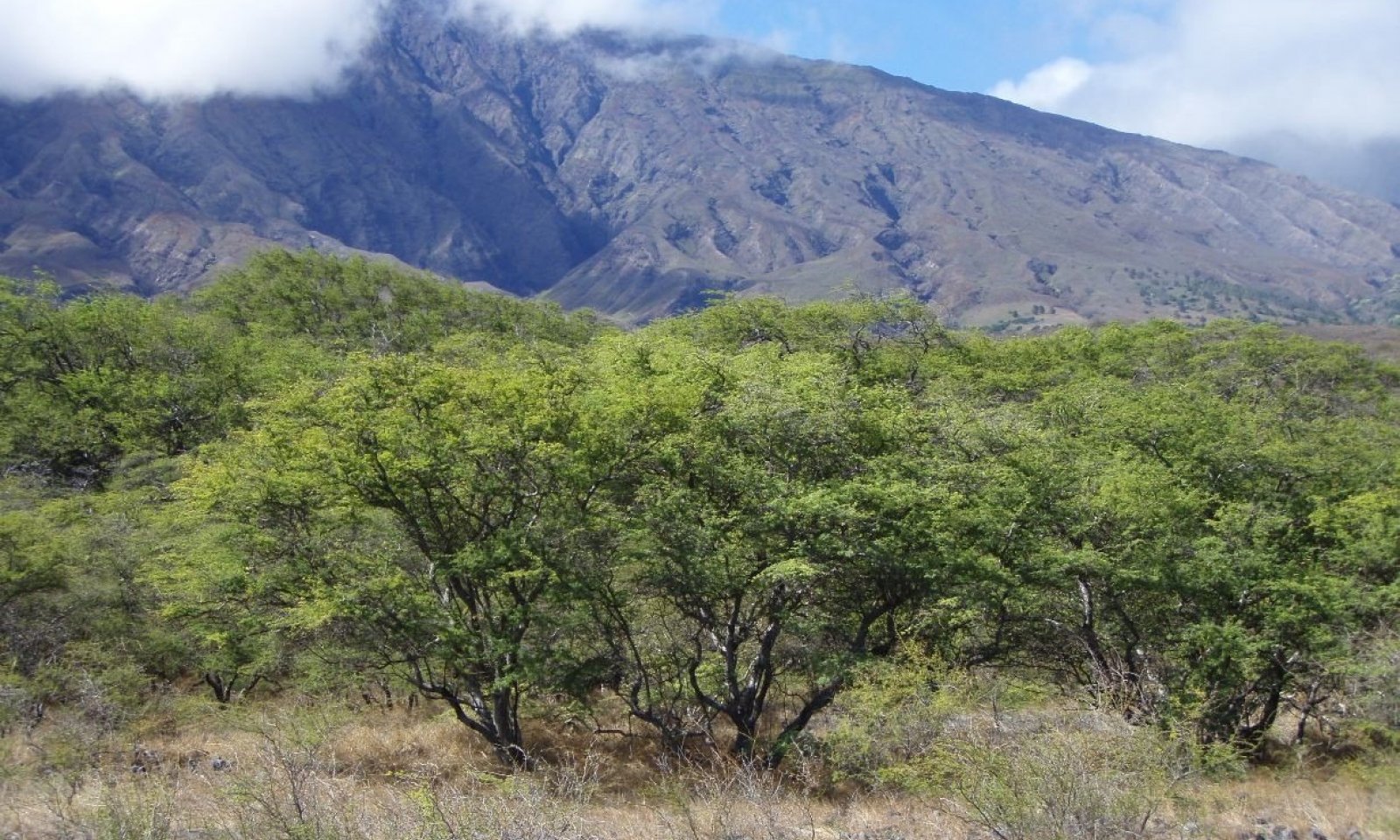
State 2 Kiawe-Invaded consists of one community phase. It occurs when brush management has not been practiced or if wildfire has not occurred for a long time, allowing kiawe to increase in density and stature to a level at which understory production is significantly reduced.
Submodel
Description
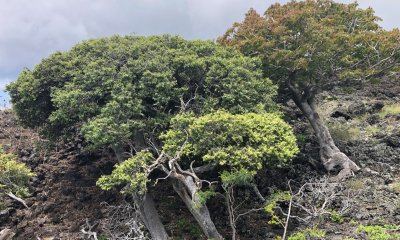
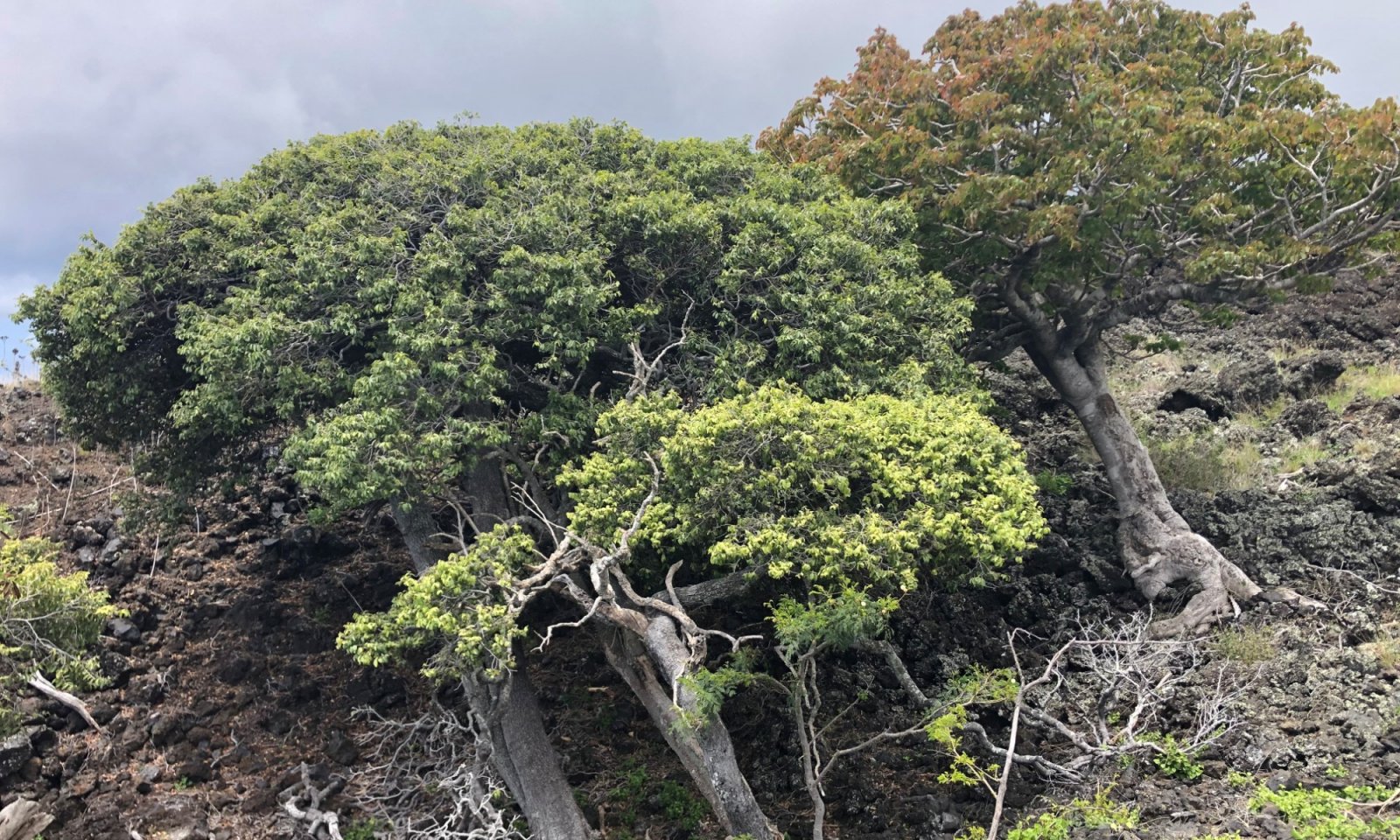
State 3 Native Savanna consists of one community phase. Intact examples of this community no longer exist within this Ecological Site. Currently only 5-10% of dry forests remain in Hawaii and less than 3% are considered healthy. No other vegetation zone in the islands has been so significantly altered. As such, this description is compiled from field observations of remnant vegetation, isolated plants on disturbed sites, a similar ecological site on the Island of Hawaii, and historical accounts.
Characteristics and indicators
Dry forests/savannas in Hawaii maintain and promote healthy soils by limiting both water and wind erosion (Nahelehele Dryland Forest Symposium 2019). They also sequester carbon, produce oxygen, help to replenish drinking water aquifers, create cool micro-climates and provide many other ecosystem services necessary for life on the planet. They are the exclusive home of many endangered native plants, birds and insects. By preserving native species, we preserve biodiversity and genetic information and open more possibilities for the evolution of plants and animals to thrive in future environments.
Resilience management
Dry forests/savannas play a crucial role in the cultural health and traditions for Hawaiian people (Nahelehele Dryland Forest Symposium 2019). It is deeply believed to “take care of the land and the land will take care of you”. The ancient Hawaiian conservation management system of Kapu or restrictions to protect scarce resources is no longer in place. However the foundation for that thinking is still valued by many today, who believe the highest relationship with these rare grandparent or kupuna trees, has become the spiritual guidance and comfort that is offered by their living presence—and we should mālama or care for them as with any beloved elder.
Submodel
Description
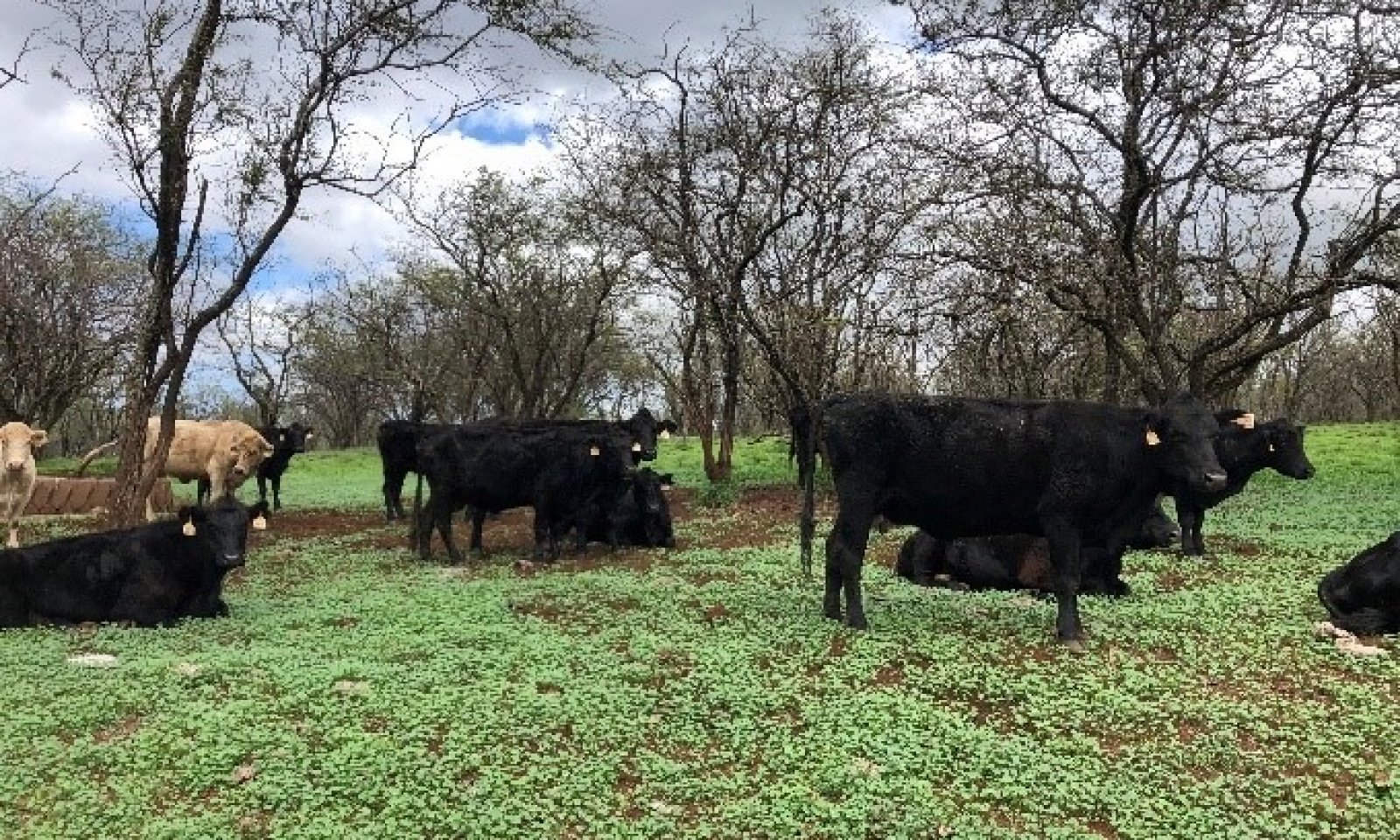
State 4 Toxic/Unpalatable Forb consists of one community phase vegetated mostly with toxic or otherwise highly unpalatable plants; kiawe may be present in varying amounts. It is caused and maintained primarily by constant heavy browsing and grazing by feral goats and/or deer.
Submodel
Mechanism
State 1 Reference transitions to State 2 Kiawe Invaded in the absence of disturbance such as fire or brush management.
Kiawe seedlings are usually found associated with animal droppings and are intolerant of shade. As such, the continuous Buffelgrass cover typical of State 1 (Reference), Phase 1.1 can limit kiawe establishment while the dominance of perennial short grasses and increasing bare ground typified in State 1, Phase 1.2 and Phase 1.3 can provide kiawe seedlings an advantage to establish. Kiawe seedling survival depends primarily on sufficient rainfall during 4 to 6 weeks after germination. As recruitment and dispersal progress, kiawe begins to out compete perennial grasses for water, soil nutrients, and light. Access to water is the greatest limiting factor to plant survival in this site. As a phreatophyte kiawe thrives where it has access to both soil moisture and ground water. Kiawe develops an overstory canopy cover that reduces solar radiation penetration to the soil surface which can result in reduced production and cover of buffelgrass and other forages beneath the dense tree canopy. Areas of bare ground increase and there may be shallow, seasonal stream channels cut into the soil.
Constraints to recovery
Conversion from State 2 back to any community in State 1 will require extensive labor, time, and money. Kiawe may cause changes in local hydrology and mineral cycling due to it’s efficient water harvesting capability and nitrogen fixation (Dudley, 2014). Controlling kiawe by mechanical means can cause soil disturbance impacts. Kiawe and weedy species from the seed bank may flourish after kiawe trees are removed. This is exacerbated in areas where the soils are disturbed.
Relevant conservation practices
| Practice | External resources |
|---|---|
|
Brush Management |
|
|
Firebreak |
|
|
Land Clearing |
|
|
Planned Grazing System |
|
|
Prescribed Grazing |
Mechanism
State 1 Reference can be restored and maintained to State 3 Native Savanna with significant management inputs. The site must be fenced or other measures must be taken to exclude all domestic and feral ungulates. A firebreak must be established and maintained around the fence line by grazing or mowing. Buffelgrass and other non-native vegetation must be killed, followed by plantings of native trees, shrubs, and vines. Supplemental irrigation may be necessary in the early stages of restoration.
Expected Effects: Increased litter accumulation, increased nutrient availability, increased water infiltration, reduced solar radiation, increased soil moisture, genetic conservation, enhanced wildlife habitat including improved pollinator forage and nesting.
Context dependence
Conversion from any community in State 1 Reference to State 3 Native Savanna will require extensive and sustained labor, time, and money.
Relevant conservation practices
| Practice | External resources |
|---|---|
|
Fence |
|
|
Firebreak |
|
|
Irrigation System, Microirrigation |
|
|
Tree/Shrub Establishment |
|
|
Restoration and Management of Rare and Declining Habitats |
|
|
Native Plant Community Restoration and Management |
|
|
Fuel Break |
|
|
Invasive Plant Species Control |
|
|
Conservation Plan Development |
|
|
Conservation Plan Implementation |
|
|
Invasive Species Pest Management |
|
|
Establish pollinator and/or beneficial insect habitat |
Mechanism
State 1 Reference transitions and is maintained to State 4 Toxic/Unpalatable Forb primarily by constant heavy browsing and grazing by feral goats and on Maui and Molokai, deer, such that nearly all perennial grass and forb (forages) are removed. To avoid this transition, management and significant reduction in the numbers of the feral animals in the area is necessary. This may involve fencing, trapping, and other herd reduction methods.
Large patches of mortality within the grass and forb functional groups are becoming common on the landscape. In areas where groundcover has persisted, the cover and vigor of perennial grass and forbs have become greatly reduced. Litter accumulation is greatly reduced to non-existent, and bare ground patches are large and frequently connected. This results in the creation of large barren areas suitable for toxic forbs to colonize. Access to water is the greatest limiting factor to plant survival in this site. Water infiltration is greatly reduced in areas of bare ground and/or reduced perennial grass cover. Solar radiation penetration to the soil surface increases significantly in areas of bare ground and/or reduced perennial grass cover. These changes create a competitive advantage which favors the establishment and further spread of toxic/unpalatable forbs as well as invasive shrub species.
Constraints to recovery
Conversion from State 4 Toxic/Unpalatable Forb back to any community in State 1 Reference will require extensive and sustained labor, time, and money.
Mechanism
State 2 Kiawe-Invaded can be restored to State 1 Reference when kiawe are cleared by fire, herbicidal application, or mechanical means. While fire will kill kiawe, prescribed burning is typically not done in Hawaii due to the level of risk to relict native ecosystems and enjoined or embedded development. Once cleared, perennial grasses and forbs reassume dominance where they have regained access to soil moisture, nutrients and light. Additional brush management strategies to avoid the proliferation of invasive shrubs (lantana, klu, koa-haole, etc) will be required and prescribed grazing strategies allowing for sufficient rest of perennial grasses and forbs will be needed.
Fire: The effects of fire impacts on plant populations and habitat quality depend on fire severity (high, medium low), habitat type burned, species biology, timing of burning (wet or dry), plant phenology (stage of plant development when burned) and site conditions (e.g. topography, moisture (Brown et al 2000). Fire will kill Kiawe and will also reduce its postfire recruitment through direct mortality of the seeds on or near the surface (Gallaher and Merlin 2010, Smith and Tunison 1992). However, vigorous regeneration from the seed bank can occur in areas of high ground disturbance. Invasive, fire-prone grasses such as buffelgrass encourage wildfire because they ignite and spread wildfire quickly (HWMO 2019). Non-native savannas in Hawaii that are not grazed create hazardous fuels which result in wildfire frequency and increased increased rates of erosion and sediment transport to the ocean. These alien grasses usually recover to pre-burn levels and often intensify after fire. Fire thus promotes conditions that increase fire frequency and size by increasing the continuity and/or fuel loadings of alien grasses (Smith and Tunison 1992). Many native species, for example, wiliwili and lama, remaining in this ecological are not adapted to fire. For this reason, relictual native woodlands are now threatened by fine fuel loading from alien grasses.
Mechanical Control: Some mechanical techniques that have been employed successfully include blade plowing, chain pulling, bulldozing, and stick raking (Gallaher and Merlin 2010). These methods can create high levels of ground disturbance and soil compaction.
Herbicidal Control. Basal bark and cutstump application of have been employed in Hawaii. Although this method works well for isolated individuals, it is both cost- and time-prohibitive for large areas with dense stands.
Context dependence
Conversion from State 2 Kiawe-Invaded back to any community in State 1 Reference will require extensive labor, time, and money.
Prescribed burning is not, on the whole, an effective management tool in Hawai`i, although it may have potential limited management and research value (Smith and Tunison 1992). Moreover, the intensification of fire-prone alien grasses following fire assures the increased incidence of fire, thereby establishing a self-perpetuating alien grass/fire cycle. The effects of fire argue strongly that all agencies responsible for the management of fire in natural areas in Hawai`i should aggressively suppress all fires, whether caused by lava flows, lightning, or humans.
Relevant conservation practices
| Practice | External resources |
|---|---|
|
Brush Management |
|
|
Land Clearing |
|
|
Planned Grazing System |
|
|
Prescribed Grazing |
|
|
Invasive Plant Species Control |
Mechanism
State 3 Native Savanna transitions to State 1 Reference when it is cleared by fire, long-term ungulate disturbance, or mechanical means. Once cleared, desired perennial grass and forbs (typically naturalized forage species) are then re-established. While fire will kill most native vegetation, prescribed burning is typically not done in Hawaii due to the level of risk to other enjoined or embedded relict native ecosystems and development.
These disturbances initiate change by affecting the composition, structure, and pattern of vegetation on the landscape (Brown et al 2000). They affect plants directly, by injury and mortality, and indirectly, by changing resource availability including light, nutrients, pollinators, and mutually beneficial microorganisms such as mycorrhizae, translating into vegetation changes (clearing) at the plant, population, and community level.
Fire Effects: Fires of all intensities, timing, and causes are harmful to most native ecosystems in Hawai`i (Smith and Tunison 1992). Alien species, particularly grasses such as buffelgrass, recover rapidly and fill in the spaces left by native plants, which recover more slowly, if at all. In Hawaii, fires establish a destructive cycle by increasing fuel loadings of flammable alien grasses, which in turn increase fire frequency and fire size. Subsequent burns further inhibit the reestablishment of native trees species. Some native species easily killed by fire include wiliwili, lama, and akia (Smith and Tunison 1992). Native species tolerant (aerial portions of all native plant species are readily killed by fire, but some resprout or recover from seed) to a very low frequency of fire, recover to some degree after burns, but typically to populations far less than those found in pre-burn conditions because they typically must compete with fire-stimulated alien grasses. Naio (Myoporum sandwicense) resprouts after fire as long as the fire is not too intense. Regrowth is slow and the original canopy cover takes over five years to regenerate. The seeds of `a`ali`i (Dodonaea viscosa) germinate readily after fire, but it is not known if they are fire-stimulated. `A`ali`i may reach higher densities after fire than before. Most native bunchgrasses recover rapidly after burning. Piligrass resprouts readily with a significant increase in cover following low-intensity fire.
Long-Term Systematic Herbivory Effects: With continued, long-term systematic herbivory and browsing by goats and, on Molokai and Maui, deer, nearly all native grass and forbs (forages) and regenerating shrub and tree seedlings are removed allowing buffelgrass to resume dominance.
Relevant conservation practices
| Practice | External resources |
|---|---|
|
Brush Management |
|
|
Range Planting |
|
|
Planned Grazing System |
|
|
Prescribed Grazing |
|
|
Invasive Plant Species Control |
Mechanism
State 4 Toxic/Unpalatable Forb is restored to State 1 Reference with significant management inputs. Management and significant reduction in the numbers of the feral animals in the area is necessary. This may involve fencing, trapping, and other herd reduction methods. The soil seed bank will probably bring back a variety of plant species in a favorable weather year but seeding of desired forages or native plants is recommended, along with continuous weed and brush control as necessary. Sites that are severely eroded may require additional management inputs and conservation practices.
Expected Effects: Rest from continued disturbance, soil stabilization, reduced soil rrosion (wind and water), recruitment and dispersal of perennial grasses, increased perennial grass cover, reduced toxic/unpalatable forb abundance/cover, decreased solar radiation to soil surface, soil stabilization, and increased water infiltration to the soil.
Context dependence
Adequate spring and summer rain events help accelerate vegetative growth, reproduction, and reestablishment of perennial grasses including buffelgrass and pitted beardgrass.
Relevant conservation practices
| Practice | External resources |
|---|---|
|
Brush Management |
|
|
Fence |
|
|
Range Planting |
|
|
Planned Grazing System |
|
|
Prescribed Grazing |
|
|
Invasive Plant Species Control |
|
|
Invasive Species Pest Management |
Model keys
Briefcase
Add ecological sites and Major Land Resource Areas to your briefcase by clicking on the briefcase ( ) icon wherever it occurs. Drag and drop items to reorder. Cookies are used to store briefcase items between browsing sessions. Because of this, the number of items that can be added to your briefcase is limited, and briefcase items added on one device and browser cannot be accessed from another device or browser. Users who do not wish to place cookies on their devices should not use the briefcase tool. Briefcase cookies serve no other purpose than described here and are deleted whenever browsing history is cleared.
Ecological sites
Major Land Resource Areas


The Ecosystem Dynamics Interpretive Tool is an information system framework developed by the USDA-ARS Jornada Experimental Range, USDA Natural Resources Conservation Service, and New Mexico State University.