

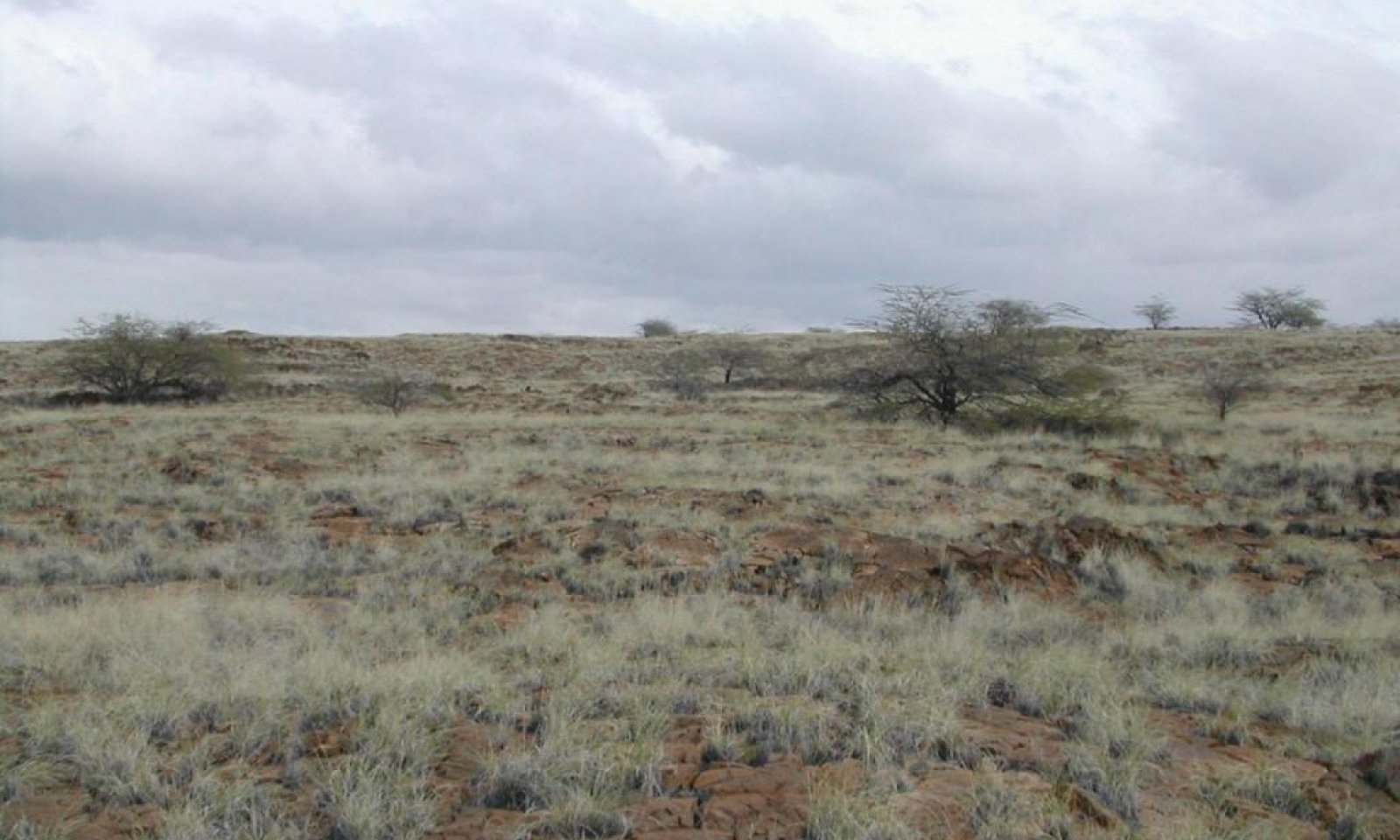
Isohyperthermic Desert

Scenario model
Current ecosystem state
Select a state
Management practices/drivers
Select a transition or restoration pathway
-
Transition T1A
State 1 Reference transitions to State 2 Kiawe-Invaded with lack of brush management practices or absence of fire.
More details - Restoration pathway R1A More details
-
Restoration pathway R2A
State 2 Kiawe Invaded can be restored to State 1 Reference by applying brush management. There may be insufficient fine fuels to carry fire.
More details - Transition T3A More details
-
No transition or restoration pathway between the selected states has been described
Target ecosystem state
Select a state
Description
This state consists of three community phases dominated by introduced grasses with less than 25 percent canopy cover of introduced trees. With lack of brush control or absence of wildfire, this state will transition to State 2 Kiawe-Invaded, in which production and cover of crimson fountaingrass and other forages is reduced. Accumulation of fine fuels under light or no grazing pressure increases the risk of fire. This can produce an open grassland with little tree overstory but presents a fire threat to developed areas nearby and likelihood of eroded soil entering the nearby ocean.
With continuous heavy grazing, particularly by cattle, crimson fountaingrass will decrease. Koa haole and bush indigo (Indigofera suffruticosa) also will decrease under heavy grazing pressure. Increasers include swollen fingergrass (Chloris barbata), bluestems (Bothriochloa spp.), and weedy forbs. With severe deterioration, shrubby species such as lantana (Lantana camara) and apple of Sodom (Solanum linnaeaum) increase. Shortgrasses such as Bermudagrass (Cynodon dactylon) and weedy annual forbs become more abundant, as well as lesser amounts of pricklypear cactus or Barbary fig (Opuntia ficus-indica). Pricklypear cactus abundance has been limited by an introduced biocontrol insect.
Submodel
Description
This state consists of one community phase. It occurs when brush management has not been practiced or if fire has not occurred for a long time, allowing kiawe to increase in density and stature to a level at which understory production is competitively reduced.
Submodel
Description
This state consists of one community phase. Intact examples of this community no longer exist. This description is compiled from field observations of remnant vegetation, isolated plants on disturbed sites, a similar ecological site on the Island of Hawaii, and historical accounts.
Submodel
Mechanism
State 1 Reference transitions to State 2 Kiawe-Invaded with lack of brush management practices or absence of fire.
Mechanism
State 1 Naturalized Grassland can be restored to a facsimile of State 3 Native Forest. Fire and ungulates must be excluded. Crimson fountaingrass and other non-native vegetation must be killed by applying aggressive weed control measures, followed by plantings of native trees, shrubs, and vines. Supplemental irrigation may be necessary in the early stages of restoration.
Mechanism
State 2 Kiawe Invaded can be restored to State 1 Reference by applying brush management. There may be insufficient fine fuels to carry fire.
Relevant conservation practices
| Practice | External resources |
|---|---|
|
Brush Management |
|
|
Prescribed Grazing |
Model keys
Briefcase
Add ecological sites and Major Land Resource Areas to your briefcase by clicking on the briefcase ( ) icon wherever it occurs. Drag and drop items to reorder. Cookies are used to store briefcase items between browsing sessions. Because of this, the number of items that can be added to your briefcase is limited, and briefcase items added on one device and browser cannot be accessed from another device or browser. Users who do not wish to place cookies on their devices should not use the briefcase tool. Briefcase cookies serve no other purpose than described here and are deleted whenever browsing history is cleared.
Ecological sites
Major Land Resource Areas


The Ecosystem Dynamics Interpretive Tool is an information system framework developed by the USDA-ARS Jornada Experimental Range, USDA Natural Resources Conservation Service, and New Mexico State University.