

Wetland Bear River Valley

Scenario model
Current ecosystem state
Select a state
Management practices/drivers
Select a transition or restoration pathway
- Transition T1A More details
- Restoration pathway R2A More details
- Transition T2A More details
- Restoration pathway R3A More details
- Transition T3A More details
-
No transition or restoration pathway between the selected states has been described
Target ecosystem state
Select a state
Description
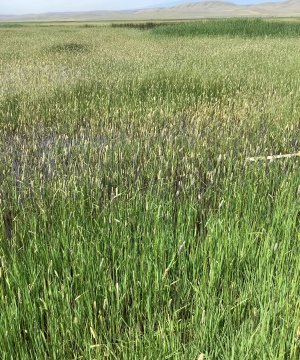
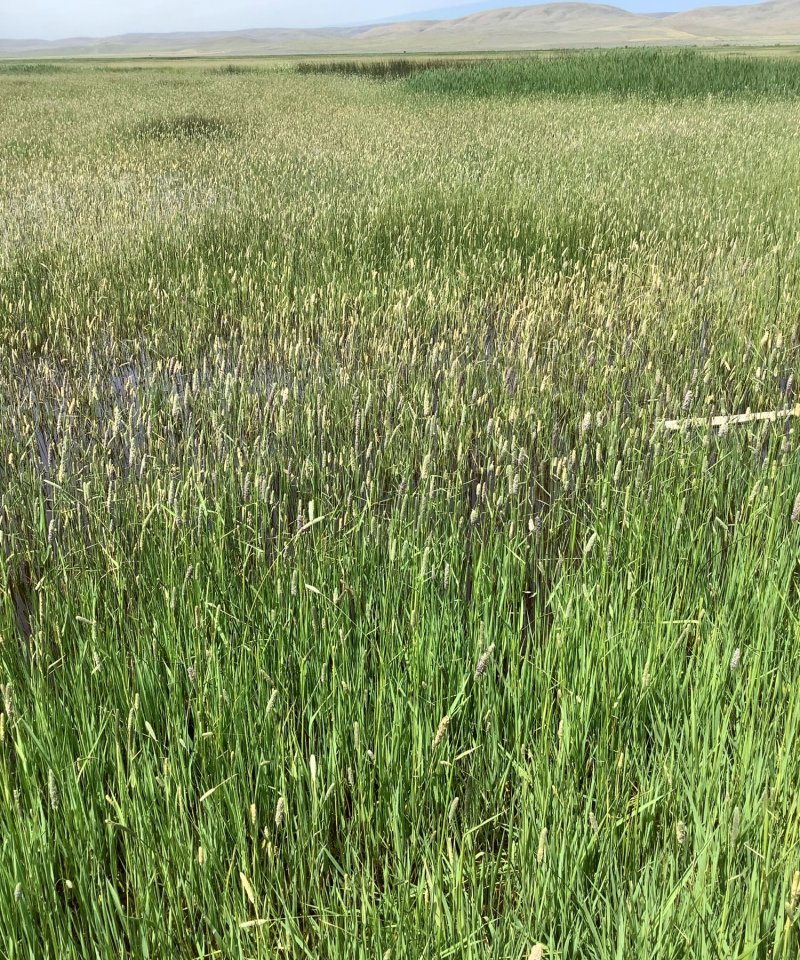
The Reference state consists of two communities: the Rush community and the Sedge community. Each plant community differs in percent composition and foliar cover of rushes, sedges, other grasses, and forbs. The dominant species found in the rush community are common spikerush (Eleocharis palustris) and hardstem bulrush (Schoenoplectus acutus). Two important processes occur in the reference state and result in community changes: 1) changes to the hydrologic regime; and 2) disturbances such as herbivory and drought.
Characteristics and indicators
Community occurrence as well as shifts between communities is a result of localized variation in the hydrology or changes in the hydrology due to disturbance. Sites with the water table closer to the surface or inundated for longer periods of time are more likely to result in the bulrush dominated community. Sites with a deeper water table or sites that are less to intermittent flooding are more likely to show characteristics of the sedge community.
Resilience management
Resilience of this ecological site is strongly tied to hydrologic function. When the hydologic system is functioning properly, resilience is high. If changes in the hydrologic regime occur due to natural or anthropogenic disturbances. Resilience decreases.
Submodel
Description
The invaded state is a result of a disturbance related change (natural or anthropogenic) accompanied by immigration of non-native plant species. With this ecological site, the two primary drivers for this state are abnormal changes to the hydrologic cycle and intensive or continuous grazing. When the hydrologic regime of the site is interrupted or altered, native vegetation may decrease in canopy cover. These openings create opportunities for invasive species establishment. The process is similar for intensive or continuous grazing. When native vegetation is grazed beyond the threshold for reasonable recovery, invasive species take advantage of the lack of competition from native vegetation, aiding in establishment.
Common indicator species of this state include meadow foxtail (Alopecurus pratensis), reed canarygrass (Phalaris arundinacea), Canada thistle (cirsium arvense), Timothy (Phleum pratense) and water hemlock (Cicuta sp.). These species often intermix with native sedges, rushes, and forbs found in the reference state.
Characteristics and indicators
This state and community is dependent on disturbances that decrease canopy cover of native vegetation. Once canopy openings exist, the state and community generally perpetuate, regardless of conditions post disturbance. Once established, invasive species are difficult to eradicate even through mechanical and chemical treatments.
This state and community is identified by greater than five percent canopy cover for any one invasive species or a cumulative canopy cover is greater than 15 percent for all invasive species.
Resilience management
This state and community is highly resilient in that once established, disturbance only further perpetuates the composition and canopy cover.
Submodel
Description
This state exists when the Wetland ecological site has been previously drained or had the hydrologic regime altered for an extended period of time, followed by the hydrologic regime being restored. In this LRU, hydrologic conditions are often altered for agricultural benefit. Overtime, these altered sites can no longer support much of the vegetation at the composition and structure found in the Reference state. Loss of Reference state vegetation can result in a transition to the Invaded state as invasive species are able to take advantage of the openings and disturbed conditions. If the hydrologic regime is altered severely and the seasonal water table is significantly changed, this could become a new ecological site. Returning a site's hydrologic conditions to those of the Reference state after these conditions have remained altered for an extended period of time results in the Reflooded state. Following reflooding, this site tends to quickly recolonize with species that are able to quickly take advantage of the conditions and lack of competition.
Characteristics and indicators
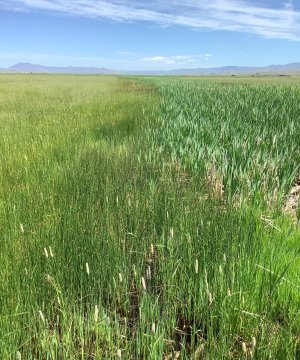
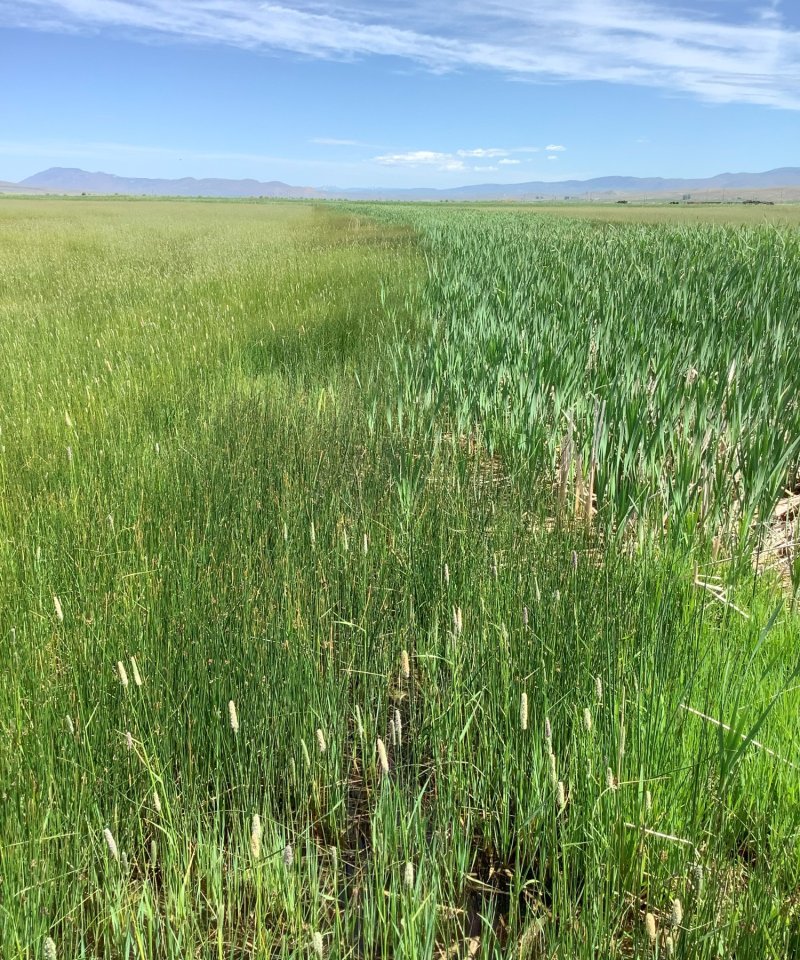
This site is characterized by a lack of plant diversity. In the early years after reflooding, this site can become nearly a monoculture of species that are able to take advantage of site conditions. The primary species to establish at this site is meadow foxtail (Alopecurus pratensis). This species can occupy as much as 90 percent of the overstory canopy and contribute to over 95 percent of the sites total production. Production in this state is high, ranging from 3,000 to 6,000 lbs/acre, averaging 5,000 lbs/acre.
Resilience management
The Reflooded state has moderate resilience. The species found in this state are colonizing species able to adapt well to a wide variety of conditions and disturbances. The lack of diversity in this state decreases resilience, lowering the ability to tolerate certain events that impact the main species.
Submodel
Mechanism
The transition from the Reference state to the Invaded state is disturbance-driven. Any natural or anthropogenic disturbance that impacts the hydrologic regime or canopy cover of native vegetation can trigger a transition to the invaded state. Reduction in native, Reference state vegetation removes competition and promotes the establishment of invasive more adapted to the post-disturbance conditions.
Primary disturbances generally result from agricultural practices, including activities that alter the hydrology of the ecological site.
Constraints to recovery
Constraints to recovery include loss of hydrologic function for the site and the establishment of invasive species. Without restoration of the previous hydrologic processes, the site would not be able to return to the Reference state. Once invasive species are established, removal to promote regrowth of reference vegetation would be costly and difficult.
Context dependence
Restoration likelihood is dependent on the ability to restore the hydrologic regime and level of invasive species establishment.
Mechanism
Restoration from the Invaded state to the Reference state requires restoration of hydrologic function and removal of invasive species. Restoration of hydrology includes returning the depth and duration of historic, seasonal water tables.
Removal of invasive species can be achieved through mechanical and chemical treatments, targeted grazing, or a combination of the three. Success of invasive species removal is improved if native species are planted or seeded after treatment.
Context dependence
Restoration success is dependent on the ability to restore hydrologic function a level of invasive species establishment. Time without further disturbance also increases restoration success.
Mechanism
The transition from the Invaded state to the Reflooded state occurs when historic hydrologic regimes and seasonal water table depths (and durations) are are restored at the ecological site.
Constraints to recovery
The primary constraints to recovery are time since the site's hydrology had been altered and the ability to fully restore hydrologic regimes.
Over time, sites that have been drained or disturbed lose native vegetation and increase in invasive species cover. The longer this time period, the more difficult it becomes to restore the site to reference.
Context dependence
Although hydrologic conditions may have been restored, plant composition and canopy cover may be dominated or shared with invasive species. Management objectives and species present may direct which state this site is correlated to for management decisions.
Mechanism
Restoration from the Reflooded state to the Reference state occurs when the site's hydrologic regime is restored and the plant canopy cover and composition resembles that of the Reference state communities. In addition to restoring hydrologic regimes, it may be necessary for mechanical treatments to remove unwanted invasive species as well as planting on Reference state plants.
Context dependence
Success of restoration from the Reflooded to the Reference state is highly dependent on vegetation composition and canopy cover. Sites with a significant presence of undesired invasive species will take more resources and time for restoration to occur.
Mechanism
The transition from the Reflooded state to the Invaded state occurs when unwanted invasive species establish and contribute to 10 percent or more of the total canopy cover after a site has been reflooded. If much of the Reference state vegetation was lost because of a lack of function in the hydrologic regime, this transition to the Invaded state can occur quickly once reflooding has taken place. Many of the common invasive species at this ecological site are able to quickly establish when a lack of competition from native vegetation exists.
Constraints to recovery
Constraints to recovery include the level of invasive species establishment as well as resources available for mechanical treatments and post-treatment reseeding.
Context dependence
After reflooding, sites in this LRU often repopulate with meadow foxtail, which is considered invasive. Depending on management objectives, meadow foxtail may not be considered undesirable and this site, in this condition, could remain in the Reflooded state.
Model keys
Briefcase
Add ecological sites and Major Land Resource Areas to your briefcase by clicking on the briefcase ( ) icon wherever it occurs. Drag and drop items to reorder. Cookies are used to store briefcase items between browsing sessions. Because of this, the number of items that can be added to your briefcase is limited, and briefcase items added on one device and browser cannot be accessed from another device or browser. Users who do not wish to place cookies on their devices should not use the briefcase tool. Briefcase cookies serve no other purpose than described here and are deleted whenever browsing history is cleared.
Ecological sites
Major Land Resource Areas


The Ecosystem Dynamics Interpretive Tool is an information system framework developed by the USDA-ARS Jornada Experimental Range, USDA Natural Resources Conservation Service, and New Mexico State University.