

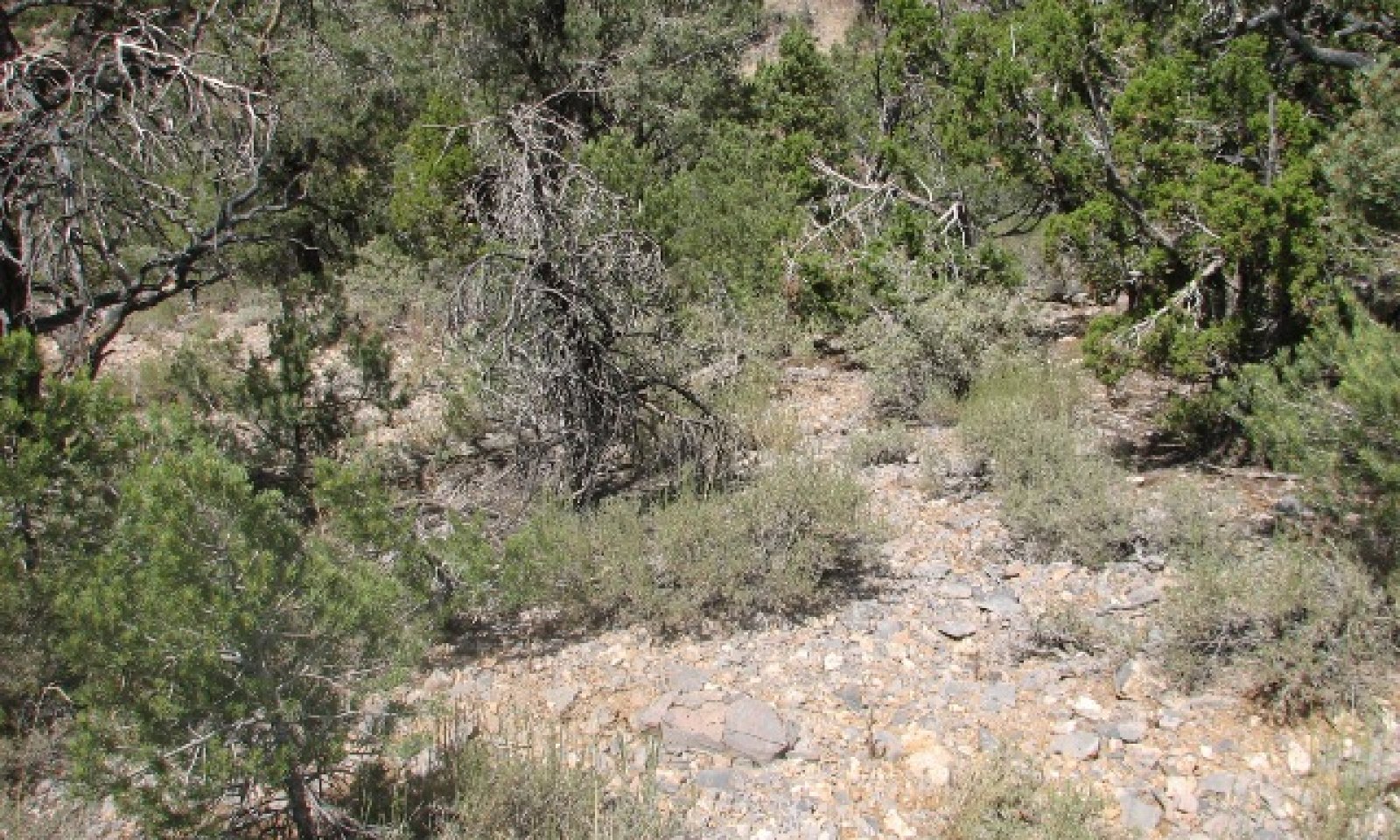
SHALLOW GRAVELLY FAN 11-15 P.Z.

Scenario model
Current ecosystem state
Select a state
Management practices/drivers
Select a transition or restoration pathway
- Transition T1 More details
- Transition T2 More details
-
No transition or restoration pathway between the selected states has been described
Target ecosystem state
Select a state
Description
The reference state is representative of the natural range of variability under pristine conditions and is dominated by black sagebrush. The plant communities of this state are stable and long lived. Primary natural disturbance mechanisms affecting this ecological site are periodic wildfire, prolonged drought, disease and insect attack. Plant community dynamics are determined by interactions between weather events and disturbance regimes. Departures from the natural disturbance return interval can lead to drastic changes in plant community composition.
Submodel
Description
The invaded state is characterized by the presence of non-native species. A biotic threshold has been crossed with the introduction of non-native species that cannot be easily removed from the plant community and have the potential to significantly alter natural disturbance regimes from the historic range of variation. Ecological resilience is reduced by the presence of non-natives, making it more difficult for this state to recover following a disturbance.
Submodel
States 2 and 5 (additional transitions)
2.2. Invaded Plant Community 2.2
2.5. Invaded Plant Community 2.5
Description
This state is characterized by the invasion of pinyon and juniper and tree cover greater than 20%. Lack of fire, drought, disease or insect attack allows pinyon and juniper to invade, dominate and eventually change site dynamics. Understory vegetation is reduced through shading, duff accumulation and competition for water and nutrients. The ability of a site to capture, transport and store water is directly related to vegetative cover. Feedbacks contributing to the stability of this alternative state include, reduced infiltration resulting from reduced vegetative cover, leading to lower soil moisture preventing the establishment of vegetation, as well as, the density, the rate of spread and dominance of trees.
Submodel
Mechanism
Introduction of non-native species due to a combination of factors including: 1) surface disturbance, 2) changes in the kinds of animals and their grazing patterns, 3) drought and/or 4) changes in fire history.
Model keys
Briefcase
Add ecological sites and Major Land Resource Areas to your briefcase by clicking on the briefcase ( ) icon wherever it occurs. Drag and drop items to reorder. Cookies are used to store briefcase items between browsing sessions. Because of this, the number of items that can be added to your briefcase is limited, and briefcase items added on one device and browser cannot be accessed from another device or browser. Users who do not wish to place cookies on their devices should not use the briefcase tool. Briefcase cookies serve no other purpose than described here and are deleted whenever browsing history is cleared.
Ecological sites
Major Land Resource Areas


The Ecosystem Dynamics Interpretive Tool is an information system framework developed by the USDA-ARS Jornada Experimental Range, USDA Natural Resources Conservation Service, and New Mexico State University.