

Shallow Sandy

Scenario model
Current ecosystem state
Select a state
Management practices/drivers
Select a transition or restoration pathway
-
Transition T1A
Heavy, season long continuous grazing
More details -
Transition T1B
Woody encroachment and absence of fire and brush management.
More details -
Transition T2A
Woody encroachment and absence of fire and brush management.
More details -
Restoration pathway R3A
Prescribed burning and brush management.
More details -
Restoration pathway R3B
Prescribed burning and brush management.
More details -
No transition or restoration pathway between the selected states has been described
Target ecosystem state
Select a state
State 1
Reference State
Description
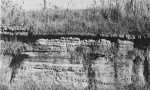
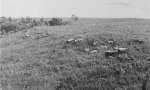
The Reference State (1) describes the range of vegetative community phases that occur on the Shallow Sandy site where the natural processes are mostly intact. The Reference Community (1.1) is a representation of the native plant community phase that occupies a site that has been minimally altered by management. The Degraded Native Grass (1.2), the At-Risk (1.3), and the Excessive Litter (1.4) Communities result from management decisions that are unfavorable for a healthy Reference Community (1.1). High perennial grass cover and production allows for increased soil moisture retention, vegetative production, and overall soil quality.
Submodel
Description
The Native/Invaded Grass State (2) has transitioned from the Reference State (1) and much of the native warm season grass community has been replaced by less desirable plants. The loss of warm-season, tall and mid grasses has negatively impacted energy flow and nutrient cycling. Water infiltration is reduced due to the shallow root system and rapid runoff characteristics of the grazing evasive plant communities. The Shortgrass Sod/Invaded Grass Community (2.1) is the primary community phase of the Native/Invaded Grass State (2).
Submodel
Description
The Invaded Woody State (3) has a canopy of at least 15 percent woody canopy cover. In the absence of fire and brush management, this site is very conducive to eastern red cedar seedling invasion, especially when adjacent to a seed source. Typical ecological impacts are a loss of native grasses, degraded forage productivity, and reduced soil quality. This state consists of the Invaded Woody Community (3.1). Disruption of natural fire regime and encroachment of exotic and invasive native woody species facilitates crossing the threshold to the Invaded Woody State (3).
Prescribed burning, wildfire and brush management will move this state toward a grass dominated state. If the Invaded Woody State (3) transitioned from the Native/Invaded Grass State (2) the land cannot transition to the Reference State (1) as the native plant community, soils, and hydrologic function have been too severely impacted prior to the woody encroachment to allow restoration to the Reference State (1).
Total annual production during an average year varies significantly, depending upon the production level prior to encroachment and the percentage of canopy cover.
Submodel
Mechanism
Heavy continuous grazing or rotational grazing with inadequate growing season recovery periods (deferment) or haying without adequate recovery periods will cause the Reference State (1) to lose a significant proportion of warm-season tall and mid grasses and cross a threshold to the Native/Invaded State (2). Water infiltration and other hydrologic functions will be reduced due to the root matting presence of sod forming grasses. With the decline and loss of deeper penetrating root systems, soil structure and biological integrity are catastrophically degraded to the point that recovery is unlikely. Once this occurs, it is highly unlikely that grazing management alone will return the community to the Reference State (1).
Mechanism
Disruption of natural fire regime and the encroachment of exotic and invasive native woody species facilitates crossing the threshold from the Reference State (1) to the Invaded Woody State (3).
Mechanism
Disruption of the natural fire regime and encroachment of invasive exotic and native woody species can cause the Native/Invaded State (2) to transition to the Invaded Woody State (3).
Mechanism
Prescribed burning, wildfire, timber harvest, and brush management will move the Invaded Woody State (3) toward the Reference State (1). Ongoing brush management such as hand cutting, chemical spot treatments, or periodic prescribed burning is required to prevent a return to the Invaded Woody State (3).
Land that transitioned to the Woody Invaded State (3) from the Native/Invaded Grass State (2) cannot transition to the Reference State (1) through removal of woody species as the native plant community, soils, and hydrologic function have been too severely impacted for restoration to occur.
Relevant conservation practices
| Practice | External resources |
|---|---|
|
Brush Management |
|
|
Prescribed Burning |
Mechanism
Prescribed burning, wildfire, timber harvest, and brush management will move the Invaded Woody State (3) toward the Native/Invaded Grass State (2). Ongoing brush management such as hand cutting, chemical spot treatments, or periodic prescribed burning is required to prevent a return to the Invaded Woody State (3).
Land that transitioned to the Woody Invaded State (3) from the Native/Invaded Grass State (2) cannot transition to the Reference State (1) through removal of woody species as the native plant community, soils, and hydrologic function have been too severely impacted for restoration to occur.
Relevant conservation practices
| Practice | External resources |
|---|---|
|
Prescribed Burning |
|
|
Prescribed Grazing |
Model keys
Briefcase
Add ecological sites and Major Land Resource Areas to your briefcase by clicking on the briefcase ( ) icon wherever it occurs. Drag and drop items to reorder. Cookies are used to store briefcase items between browsing sessions. Because of this, the number of items that can be added to your briefcase is limited, and briefcase items added on one device and browser cannot be accessed from another device or browser. Users who do not wish to place cookies on their devices should not use the briefcase tool. Briefcase cookies serve no other purpose than described here and are deleted whenever browsing history is cleared.
Ecological sites
Major Land Resource Areas


The Ecosystem Dynamics Interpretive Tool is an information system framework developed by the USDA-ARS Jornada Experimental Range, USDA Natural Resources Conservation Service, and New Mexico State University.