


Natural Resources
Conservation Service
Ecological site R106XY079NE
Shallow Sandy
Last updated: 6/09/2025
Accessed: 04/11/2026
General information
Provisional. A provisional ecological site description has undergone quality control and quality assurance review. It contains a working state and transition model and enough information to identify the ecological site.
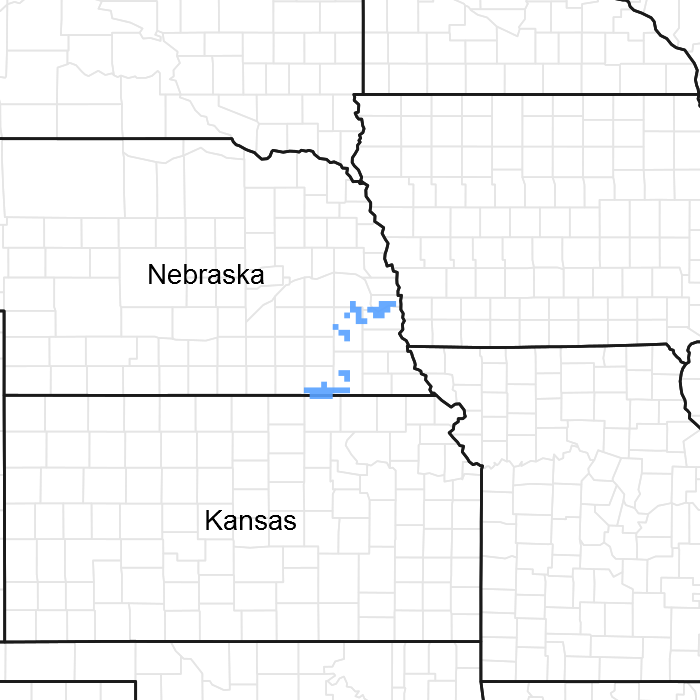
Figure 1. Mapped extent
Areas shown in blue indicate the maximum mapped extent of this ecological site. Other ecological sites likely occur within the highlighted areas. It is also possible for this ecological site to occur outside of highlighted areas if detailed soil survey has not been completed or recently updated.
MLRA notes
Major Land Resource Area (MLRA): 106X–Nebraska and Kansas Loess-Drift Hills
Named the “Nebraska and Kansas Loess-Drift Hills,” Major Land Resource Area (MLRA) 106 is divided almost evenly between southeastern Nebraska (52%), and northeastern Kansas, (48%). The approximately seven-million-acre landscape covers all or parts of thirty counties between the two states. The northern border is located on the north end of Saunders County, Nebraska, and the MLRA extends into Douglas County, Kansas in the south. The Nebraska cities of Beatrice and Lincoln are the major population centers in the north, while Topeka and Lawrence in Kansas are the primary cities in the south. The Platte, Little Nemaha, and the North Fork of the Big Nemaha Rivers flow through the Nebraska side of the MLRA, while the Black Vermillion, the Soldier, and the Delaware Rivers are the major waterways on the Kansas side. The Big Blue River runs through both states, while the Salt Creek hydrologic system located near Lincoln, Nebraska provides habitat for the only known population of the Federally listed endangered Salt Creek Tiger Beetle.
This dissected glacial drift plain primarily consists of broad, smooth ridgetops, and slopes ranging from nearly level to steep. The elevation in MLRA 106 decreases from west to east, and ranges from nearly 1,650 feet to less than 790 feet above sea level. Stream valleys in this landscape are narrow and bordered by steep hills, with 10 to 20 feet of local relief. The river valleys are broader and may drop up to over 160 feet below the adjacent hilltops. The uplands are primarily comprised of glacial drift underlying a mantle of loess, while alluvial deposits are found in the stream and river valleys. Limestone and shale quarries are also located in MLRA 106. The predominant soil orders in this MLRA are mesic, udic, Mollisols, Alfisols, and Entisols. Loams and clays are the primary soil textures in this landscape.
Sixty-two percent of the land in this MLRA has been broken out of native prairie and farmed, while only 23 percent of the grasslands remain. Livestock grazing, primarily by cattle, is the main industry on these remnants. Corn, wheat, soybeans, and grain sorghum are the primary commodity crops, but a significant number of acres are also planted to alfalfa for harvest as hay. With annual precipitation averaging from 40 inches in the southeast, to 28 inches in the northwest, irrigation for crop production is not a critical factor in most years.
The historical matrix vegetation type is Tallgrass Prairie, and big and little bluestem, switchgrass, Indiangrass, sideoats, and blue grama make up the bulk of the warm season species. Historically, western wheatgrass was the dominant cool-season grass but today the dominant cool-season grasses are introduced grasses, smooth brome in the north and tall fescue in the south. Large and small patch vegetative communities are found primarily along the riparian zones, and on both upland and lowland saline sites. Woodlands make up about six percent of MLRA 106, consisting primarily of green ash, oak, hackberry, boxelder, and maple trees.
Wildlife flourishes in this combination of crop and grassland environments. In a landscape historically occupied by bison herds, white-tailed deer are now the most abundant wild ungulates. A variety of smaller species, including coyote, raccoon, opossum, porcupines, muskrat, beaver, squirrel, and mink thrive in the region. Native grassland bird populations are limited by the lack of contiguous native prairie and the fragmented habitat created by the farmland. The rivers, streams, and lakes harbor excellent fisheries, and migrating and local waterfowl use the wetland complexes. These complexes provide ideal habitat for wading and shore bird species as well.
This landscape serves as a backdrop for a disturbance driven ecosystem, evolving under the influences of herbivory, fire, and variable climate. Historically, these processes created a heterogeneous mosaic of plant communities and structure heights across the region. Any given site in this landscape experienced fire every three to four years. Fires were caused by lightning strikes and also were set by Native Americans, who used fire for warfare, signaling, and to refresh the native grasses. The Indigenous inhabitants understood the value of fire as a tool and that the highly palatable growth following a fire provided excellent forage for their horses and attracted grazing game animals such as bison and elk.
Land use patterns by post European settlers have fragmented the native grasslands through conversion to cropland, transportation corridors, and other developments. This has significantly altered the natural fire regime allowing encroachment by native and introduced shrubs and trees into the native prairie remnants throughout the MLRA. Aggressive fire suppression policies have exacerbated this process to the point that shrub and tree encroachment is a major ecological threat in the majority of both native and reseeded grasslands. Introduction of eastern red cedar as a windbreak species further facilitates invasion by this species. While eastern red cedar is native to the landscape, the historic population in MLRA 106 was limited to isolated pockets in rugged river drainageways that were protected from fire. Widespread plantings of windbreaks with eastern red cedar as a primary component have provided a seed source for the aggressive woody plant. The ensuing encroachment into the native grasslands degrades the native wildlife habit and causes significant forage loss for domestic livestock. Since it does not sprout from the roots, eastern red cedar is very susceptible to fire when under six feet tall. Management with prescribed fire is exceedingly effective if applied before this stage. Larger eastern red cedars can also be controlled with fire, but successful application requires the use of specifically designed ignition and holding techniques.
Classification relationships
►USDA-NRCS (2022)◄
Land Resource Region – M, Central Feed Grains and Livestock Region
Major Land Resource Area (MLRA) – 106
►Fenneman (1916) Physiographic Regions ◄
Division – Interior Plains
Province – Central Lowland
Section – Dissected Till Plains
►USDA-USFS (2007) Ecoregions◄
Domain – Humid Temperate
Division – Prairie
Province – Prairie Parkland (Temperate)
Section – Central Dissected Till Plains (251C)
►EPA Ecoregions (Omernik 1997)◄
I – Great Plains (9)
II – Temperate Prairies (9.2)
III – Western Corn Belt Plains (9.2.3)
IV – Loess and Glacial Drift Hills (47i)
►Associated Counties◄
Nebraska: Butler, Cass, Gage, Jefferson, Johnson, Lancaster, Nemaha, Otoe, Pawnee, Richardson, Saline, Saunders, Seward
Kansas: Atchison, Brown, Doniphan, Douglas, Franklin, Jackson, Jefferson, Johnson, Leavenworth, Marshall, Nemaha, Osage, Pottawatomie, Shawnee, Wabaunsee, Washington, Wyandotte
Ecological site concept
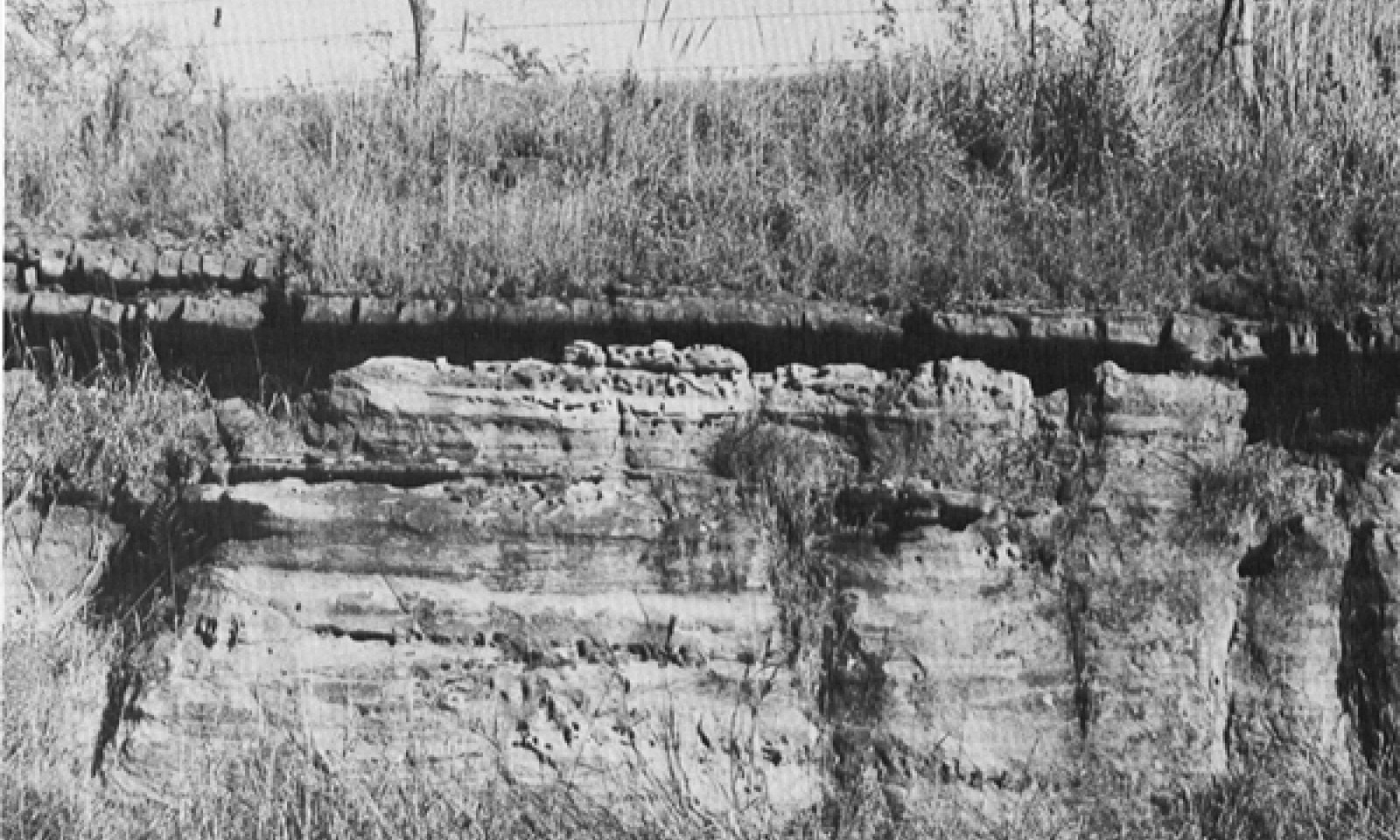
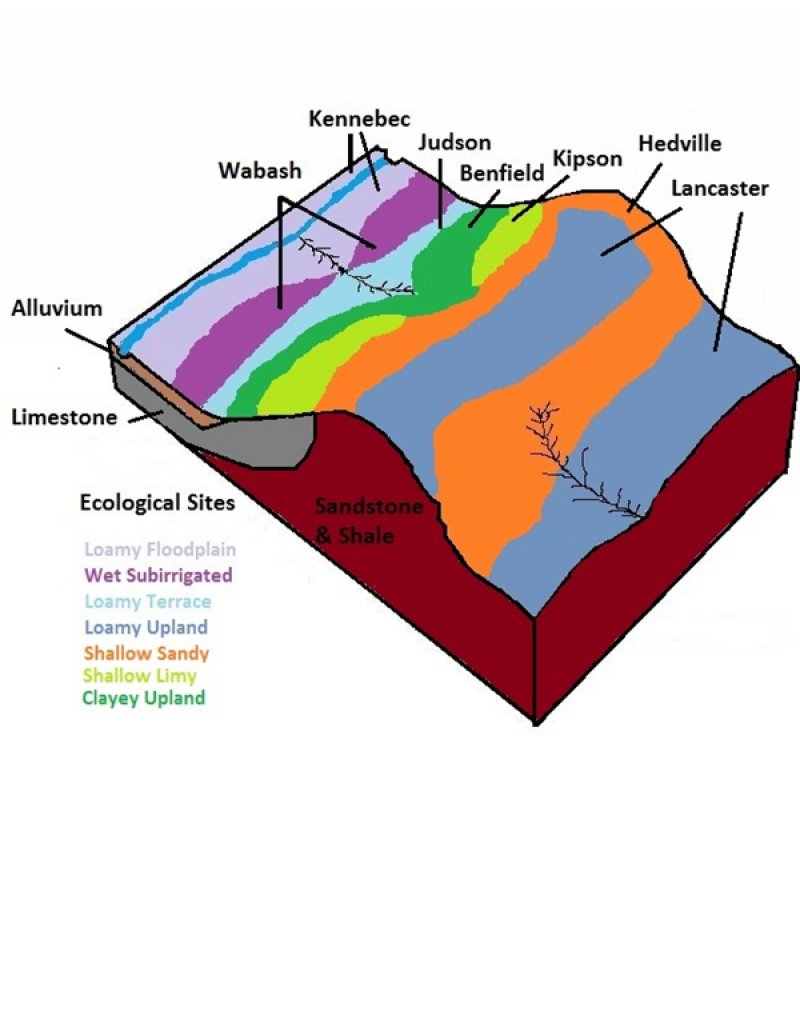
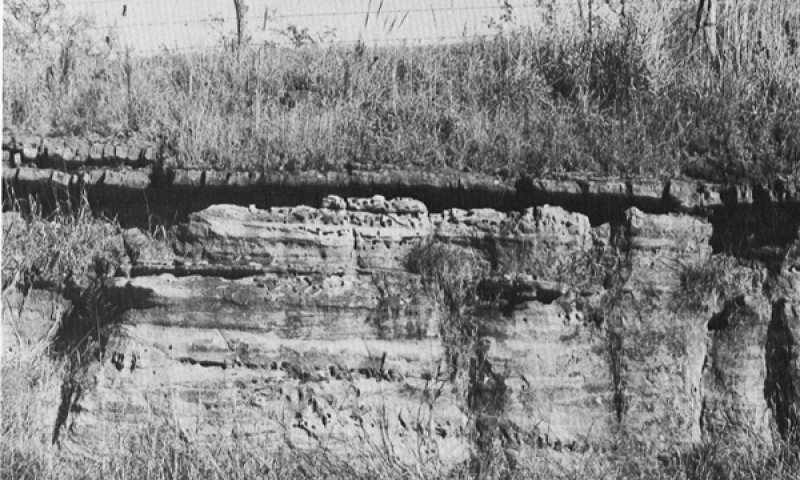
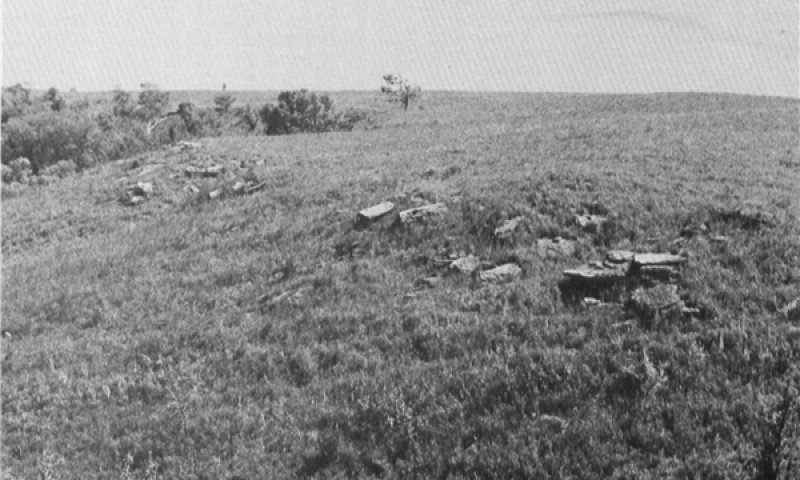
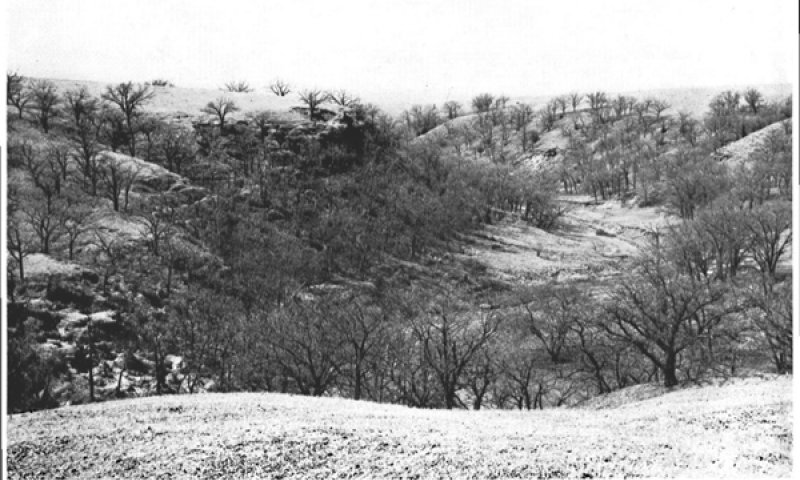
The Shallow Sandy ecological site is located on upland landscapes and does not receive additional moisture from runoff or overflow. The typical slope range is from 6 to 30 percent but may be steeper. Soils are shallow (less than 20 inches) with surface textures of cobbly loam, loam, and silt loam that are 4 to 15 inches thick. These well drained to excessively drained soils are formed in residuum weathered from sandstone. The vegetation of the Reference Community consists of a mix of warm-season tall and mid grasses. Big bluestem and little bluestem are the dominant grasses. Switchgrass, Indiangrass, and sideoats grama are secondary species. This site is more intact than many other upland sites within the MLRA as it is better suited to grazing than to farming.
Associated sites
| R106XY074NE |
Clayey Upland The Clayey Upland ecological site is often located adjacent to the Shallow Sandy ecological site. |
|---|---|
| R106XY075NE |
Loamy Upland The Loamy Upland ecological site is often located adjacent to the Shallow Sandy ecological site. |
Similar sites
| R106XY077NE |
Shallow Limy The Shallow Limy ecological site is similar to the Shallow Sandy ecological site in terms of landscape position and presence of bedrock within 20 inches of the surface but Shallow Limy ecological sites typically occur on calcareous soils while Shallow Sandy ecological sites occur on non-calcareous soils that typically have a coarser surface texture. |
|---|---|
| R106XY031NE |
Shallow Savannah The Shallow Savannah ecological site and Shallow Sandy ecological sites occur on similar landscape positions and both sites have the presence of bedrock within 20 inches of the surface. The soils of Shallow Savannah sites have sandy surface textures while the soils of Shallow Sandy sites have loamy surface textures. |
Table 1. Dominant plant species
| Tree |
Not specified |
|---|---|
| Shrub |
Not specified |
| Herbaceous |
(1) Andropogon gerardii |



Click on box and path labels to scroll to the respective text.
| T1A | - | Heavy, season long continuous grazing |
|---|---|---|
| T1B | - | Woody encroachment and absence of fire and brush management. |
| T2A | - | Woody encroachment and absence of fire and brush management. |
| R3A | - | Prescribed burning and brush management. |
| R3B | - | Prescribed burning and brush management. |
State 1 submodel, plant communities
| 1.1A | - | Continuous season long grazing or rotational grazing with inadequate growing season recovery periods. |
|---|---|---|
| 1.1B | - | Prolonged absence (> 5 years) of herbivory and fire. |
| 1.2A | - | Prescribed grazing with appropriate stocking rate and adequate growing season recovery periods. |
| 1.2B | - | Continued grazing with inadequate growing season recovery periods. |
| 1.2C | - | Prolonged absence (>5 years) of herbivory and fire. |
| 1.3A | - | Prescribed grazing with appropriate stocking rate and adequate growing season recovery periods. |
| 1.3B | - | Prolonged absence (>5 years) of herbivory and fire. |
| 1.4A | - | Reintroduction of herbivory and fire. |
| 1.4B | - | Reintroduction of herbivory and fire. |
| 1.4C | - | Reintroduction of herbivory and fire. |