

Subtropical Marl Prairies of Everglades

Scenario model
Current ecosystem state
Select a state
Management practices/drivers
Select a transition or restoration pathway
-
Transition T1A
Increase in Long-Term Freshwater Hydroperiod
More details -
Transition T1B
Invasion of Non-Native / Exotic Species
More details -
Transition T1C
Modified for Desired Land Use
More details -
Transition T1D
Human Alteration / Transportation of Materials
More details -
Transition T2A
Invasion of Non-Native / Exotic Species
More details -
Transition T2B
Modify for Desired Land Use
More details -
Transition T2C
Human Alteration / Transportation of Materials
More details -
Restoration pathway R3A
Mechanical / Biological / Chemical Removal of Species
More details -
Restoration pathway R3B
Mechanical / Biological / Chemical Removal of Species
More details -
Transition T3A
Modify for Desired Land Use
More details -
Transition T3B
Human Alteration / Transportation of Materials
More details -
Restoration pathway R4A
Landscape and Habitat Restoration
More details -
Restoration pathway R4B
Landscape and Habitat Restoration
More details -
Restoration pathway R4C
Landscape and Habitat Restoration
More details -
Transition T4A
Human Alteration / Transportation of Materials
More details -
No transition or restoration pathway between the selected states has been described
Target ecosystem state
Select a state
Description
Marl prairies are sparsely vegetated, graminoid dominated communities found on marl substrates in the Everglades ecoregion of South Florida. Periphyton function within this ecological site to precipitate calcium carbonate to form marl substrates found within the soil profile and on the surface. Stunted trees may be present within this community.
Characteristics and indicators
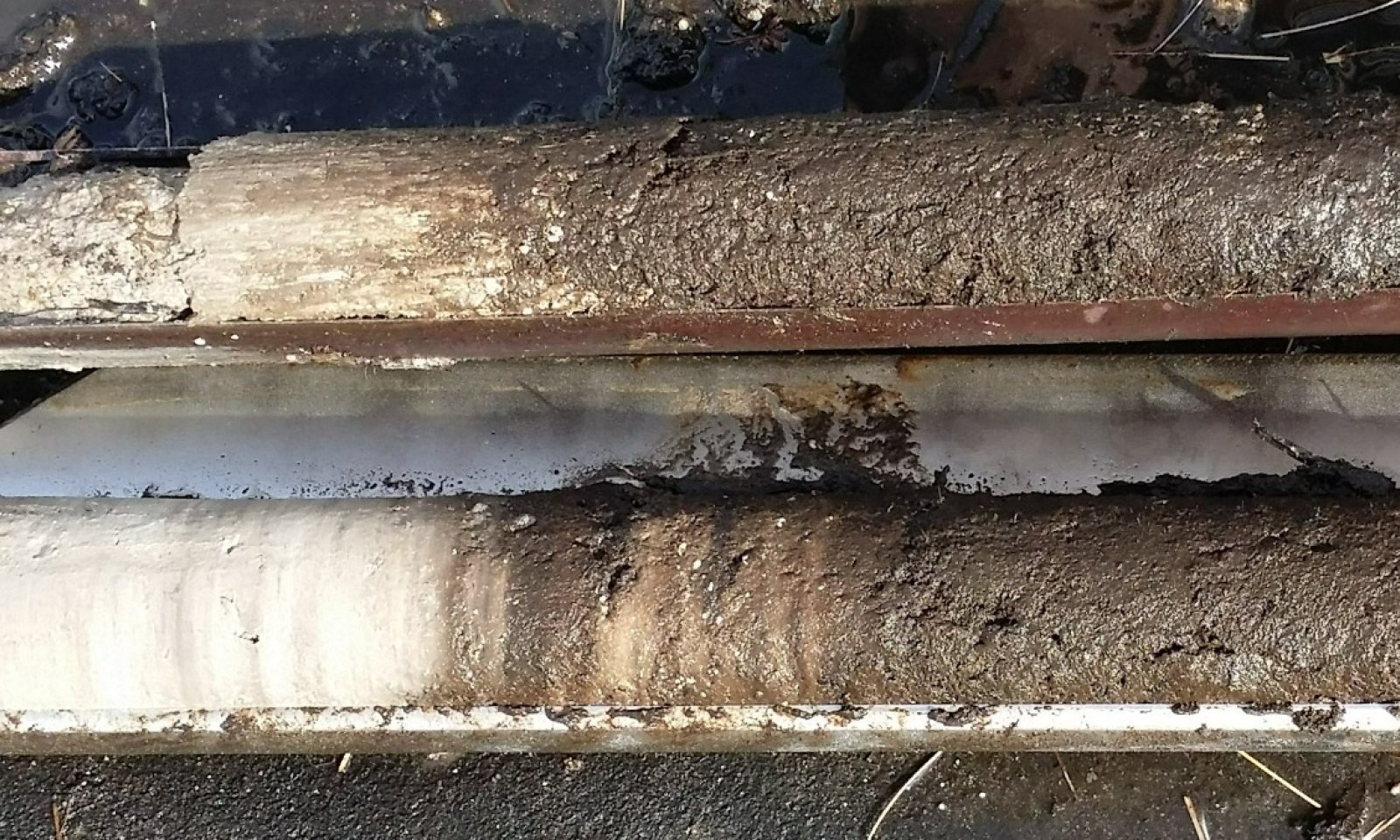
Marl is the primary indicator of this ecological site, formed by blue-green algae species known as periphyton.
Resilience management
Fire is used to maintain this community, estimated at intervals of every 3 to 15 years. This helps prevent invasion from woody species and help stimulate flowering plants, with fires taking place during the winter months. Maintenance of the hydroperiod is also plays an important role. This site has a hydroperiod of 3 to 7 months which helps maintain grasses and herbaceous species being dominant. Alteration of the natural hydroperiod, whether increases or decreases, or changes in salinity, will alter the reference state.
Submodel
Description
This state is characterized by a long hydroperiod (>7 months) and is dominated by grasses, sedges, broadleaf emergent, floating aquatics, or shrubs. Species composition usually is heterogeneous and forms along different zones related to length of hydroperiod and depth of flooding. These marshes are often the result of marl prairies which have experienced an increase in its long-term hydroperiod, promoting organic matter accumulation and sawgrass development. These can be characterized as sawgrass marshes found on organic soils over calcitic soils.
Submodel
Description
This state consists of Florida Department of Agriculture and Consumer Services (FDACS) Non-Native Category 1 Species list . More information on these species list can be found:
https://www.fdacs.gov/content/download/63140/file/Florida%E2%80%99s_Pest_Plants.pdf
or by contacting the UF / IFAS Center for Aquatic and Invasive Plants (http://plants.ifas.ufl.edu/),
the UF / IFAS Assessment of Non-native Plants in Florida's Natural Areas (https://assessment.ifas.ufl.edu/),
or the FWC Invasive Plant Management Section (http://myfwc.com/wildlifehabitats/invasive-plants/).
This community will not represent every possibility of invasive species but rather the most common in these areas.
Characteristics and indicators
Non-native species include species that exist outside of Florida's natural range and introduced to the state by people, weather, or any other means.
Resilience management
This state can be found as a part of any other state and can completely destroy the native habitat if not properly managed. Restoration to natural communities after exotic invasion include practices such as mechanical, biological, and chemical removals.
Description
The following communities comprise the major land uses in the United States and the land uses receiving the majority of the conservation treatment that address soil, water, air, plant, and animal resources within the USDA.
Characteristics and indicators
These land uses consist of areas that are not completely naturalized (i.e. native habitat) but are not completely altered by anthropogenic means.
Submodel
States 2 and 5 (additional transitions)
4.2. Open Transitional Managed Communities
4.5. Silviculture
Description
These areas include soils that were intentionally and substantially modified by humans for an intended purpose, commonly for terraced agriculture, building support, mining, transportation, and commerce. The alteration is of sufficient magnitude to result in the introduction of a new parent material (human-transported material) or a profound change in the previously existing parent material (human-altered material). They do not include soils modified through standard agricultural practices or formed soils with unintended wind and water erosion. When a soil is on or above an anthropogenic landform or microfeature, it can be definitely be associated with human activity and is assigned to a unique taxa, usually found as an "Urban land complex" within that communities' natural soil properties (e.g., Biscayne gravelly marly silt loam, drained-Urban land complex, 0-1% slopes).
Characteristics and indicators
Evidence of these areas include soils with manufactured items (e.g. artifacts) present in the profile, human altered-materials (e.g., deeply excavated or deeply plowed soil) or human-transported material (e.g., fill), and position on or above anthropogenic landforms (e.g., flood-control levees) and microfeatures (e.g., drainage ditches). Detailed criteria regarding the identification of anthropogenic (artificial) landforms, human-altered materials, and human-transported material are in the "Keys to Soil Taxonomy" (Soil Survey Staff, 2014).
Submodel
Mechanism
Longer hydroperiods can transition this community to freshwater marshes favoring peat development. Occurrence of this transition can be natural over extended periods of time or may be through anthropogenic alterations of the surrounding landscape which may alter the natural hydroperiod of these communities.
Mechanism
The invasion of non-native or exotic species can be driven by a multitude of different environmental factors such as changes in natural hydroperiods or in fire regimes. Typically once a change in one of the two factors mentioned above occurs, non-native or exotic invasive species become established and begin to compete with native species for habitat and nutrients.
Constraints to recovery
Recovery from non-native or exotic invasive species may be difficult due to many adaptations which allow them to outcompete and survive in altered conditions. Localized knowledge for each species must be known for best removal of it without harming the native environment, and often different treatments must be applied over one given area.
Context dependence
Growth of non-native and exotic invasive species can be rapid following a change in a natural stressor such as fire frequency or natural hydroperiods which might have once kept the invasive species at bay.
Mechanism
Modify the land for the desired land use. This may include the establishment of grazing species or the modification of land for the cultivation of crops of other desired products. Due to the shallow nature of this ecosite, the development of these areas utilize rock plowing, a process that breaks the limestone bedrock to establish deeper soils used for agriculture and planting species.
Mechanism
This transition is driven by the alteration and/ or transportation of materials via anthropogenic means.
Mechanism
The invasion of non-native or exotic species can be driven by a multitude of different environmental factors such as changes in natural hydroperiods or in fire regimes. Typically once a change in one of the two factors mentioned above occurs, non-native or exotic invasive species become established and begin to compete with native species for habitat and nutrients.
Constraints to recovery
Recovery from non-native or exotic invasive species may be difficult due to many adaptations which allow them to outcompete and survive in altered conditions. Localized knowledge for each species must be known for best removal of it without harming the native environment, and often different treatments must be applied over one given area.
Context dependence
Growth of non-native and exotic invasive species can be rapid following a change in a natural stressor such as fire frequency or natural hydroperiods which might have once kept the invasive species at bay.
Mechanism
Modify the land for the desired land use. This may include the establishment of grazing species or the modification of land for the cultivation of crops of other desired products.
Mechanism
This transition is driven by the alteration and/ or transportation of materials via anthropogenic means.
Mechanism
Mechanical, biological, and chemical removal strategies include removing the non-native and exotic invasive species through various mechanisms. Localized knowledge for individual non-native or exotic invasive species is needed for specific management. Sometimes introduction of fire regimes may prevent or stop the growth of non-native or exotic invasive species, but many species are fire tolerant. Mechanical removal might include cutting and removal of invasive species. Chemical removal might include spot spraying or basal bark injection treatments.
Context dependence
Mechanical, biological, and chemical removal of non-native and exotic invasive species is a time dependent process, with both removal types taking long times to be considered effective.
Mechanism
Mechanical, biological, and chemical removal strategies include removing the non-native and exotic invasive species through various mechanisms. Localized knowledge for individual non-native or exotic invasive species is needed for specific management. Sometimes introduction of fire regimes may prevent or stop the growth of non-native or exotic invasive species, but many species are fire tolerant. Mechanical removal might include cutting and removal of invasive species. Chemical removal might include spot spraying or basal bark injection treatments.
Context dependence
Mechanical, biological, and chemical removal of non-native and exotic invasive species is a time dependent process, with both removal types taking long times to be considered effective.
Mechanism
Modify the land for the desired land use. This may include the establishment of grazing species or the modification of land for the cultivation of crops of other desired products.
Mechanism
This transition is driven by the alteration and/ or transportation of materials via anthropogenic means.
Mechanism
These practices include the restoration of both the natural hydroperiods and landscape in advance of revegetating the area (if needed).
Mechanism
These practices include the restoration of both the natural hydroperiods and landscape in advance of revegetating the area (if needed).
Mechanism
These practices include the restoration of both the natural hydroperiods and landscape in advance of revegetating the area (if needed).
Model keys
Briefcase
Add ecological sites and Major Land Resource Areas to your briefcase by clicking on the briefcase ( ) icon wherever it occurs. Drag and drop items to reorder. Cookies are used to store briefcase items between browsing sessions. Because of this, the number of items that can be added to your briefcase is limited, and briefcase items added on one device and browser cannot be accessed from another device or browser. Users who do not wish to place cookies on their devices should not use the briefcase tool. Briefcase cookies serve no other purpose than described here and are deleted whenever browsing history is cleared.
Ecological sites
Major Land Resource Areas


The Ecosystem Dynamics Interpretive Tool is an information system framework developed by the USDA-ARS Jornada Experimental Range, USDA Natural Resources Conservation Service, and New Mexico State University.