


Natural Resources
Conservation Service
Ecological site R240XY707AK
Arctic Scrub-Sedge Coastal Plain
Last updated: 6/05/2025
Accessed: 03/22/2026
General information
Provisional. A provisional ecological site description has undergone quality control and quality assurance review. It contains a working state and transition model and enough information to identify the ecological site.
MLRA notes
Major Land Resource Area (MLRA): 240X–Nulato Hills-Southern Seward Peninsula Highlands
The Nulato Hills-Southern Seward Peninsula Highlands (MLRA 240X) is in Western Alaska, which describes the mostly treeless zone of discontinuous permafrost in the arctic. This MLRA is approximately 18,500 square miles in size. The terrain is defined by rolling hills, low mountains and river valleys. Flood plains systems are common but generally narrow. This watershed drains into Norton Sound and Bering Sea. Major rivers include the Unalakleet, Koyuk, and Fish Rivers. The area is mostly undeveloped wild land that is sparsely populated. Residents use this remote area primarily for subsistence hunting, fishing, and gathering. Villages are primarily located along the coast and include the two larger municipalities of Nome and Unalakleet, and various other villages such as Koyuk and Saint Michael.
Geology and Soils
This MLRA was mostly unglaciated during the late Pleistocene. Glaciers were limited to upper elevations on the Seward Peninsula. Coastal lowlands are filled with Holocene deposits. Silty eolian deposits mantle coastal areas and the slopes of lower elevation hills and mountains. Flood plains and terraces are built on fluvial deposits. Modified glacial moraines are evident in areas of past glacial activity. Bedrock material is primarily a mix of sedimentary and volcanic rock (USDA, 2022).
This MLRA is in the zone of discontinuous permafrost. Shallow permafrost is most common on coastal plains, gentle footslopes, and organic swales. Permafrost constitutes a root- restrictive layer that perches water and creates poorly drained or poorly drained soils.
Common soil orders include Gelisols that support permafrost and Entisols and Inceptisols which are marked by little to no development. The Gelisols are typically shallow or moderately deep to permafrost, occur on finer to gravelly textured sediments, and are poorly or very poorly drained. Common Gelisol suborders are Histels, Orthels, and Turbels. The Histels have thick accumulations of surface organic material and commonly occur on mounds of plains. The Orthels and Turbels have comparably thinner surface organic material. Turbels show signs of cryoturbation while Orthels do not. Entisols and Inceptisols are common on shallow rocky soils of the alpine and subalpine, as well as scoured flood plain soils. Non-soil areas (rock outcrop, rubble land and beaches) make up approximately five percent of the MLRA surface.
Climate
The climate is a mix of maritime in the summer and continental in the winter, which is a result of sea ice in Norton Sound. Summers are brief and cool summers and winters are long and cold. Mean annual precipitation is 15 to 20 inches at lower elevations, increasing to 20 to 40 inches at higher elevations (USDA, 2022). Mean annual temperatures ranges from 23 to 31 degrees F (SNAP, 2014a).
Vegetation
Vegetation is mainly influenced by site and soil characteristics such as temperature-degree days, exposure to wind, soil depth, and soil hydrology. Dwarf scrublands are present across much of the uplands. Lower elevations generally support more developed soils. Well drained soils support tall shrubs. Organic soils support mosses, graminoids and low shrubs. Forests occur on some low mountain slopes and river valleys but are associated with the Yukon-Kuskokwim Highlands (MLRA 230X). Tussock tundra is ubiquitous across much of the poorly drained, low gradient slopes and coastal plains (USDA, 2022).
LRU notes
There are two life zones delineated by plant communities along a temperature gradient driven by elevation. The predominant climate across MLRA 240X is arctic lowlands. Low mean annual air temperatures and a short growing season shape the vegetation across the landscape. The alpine climate zone is generally reserved for elevations above 1,200 feet. Decreased mean annual temperatures at these higher elevations support unique soils and vegetation.
Classification relationships
Alaska Vegetation Classification:
Dry soil: Dwarf ericaceous scrubland (II.D.2 – level III) / Crowberry dwarf shrub tundra (II.D.2.c – level IV)
Wet, frozen soil: Wet graminoid herbaceous (III.A.3 – level III) / Wet sedge-grass meadow tundra (III.A.3.b – level IV)
Wet, non-frozen soil: Wet graminoid herbaceous (III.A.3 – level III) / Halophytic grass wet meadow (III.A.3.h – level IV)
(Viereck et al., 1992)
BioPhysical Settings:
6817010 – Alaska Arctic Coastal Sedge-Dwarf Shrubland
6817120 – Alaska Arctic Coastal Brackish Meadow
6817040 – Alaska Arctic Permafrost Plateau Dwarf Shrub Lichen Tundra
(Landfire, 2009)
Circumpolar Arctic Vegetation Map:
S1.2 – Erect dwarf-shrub, lichen communities
(CAVM Team, 2003)
Ecological site concept
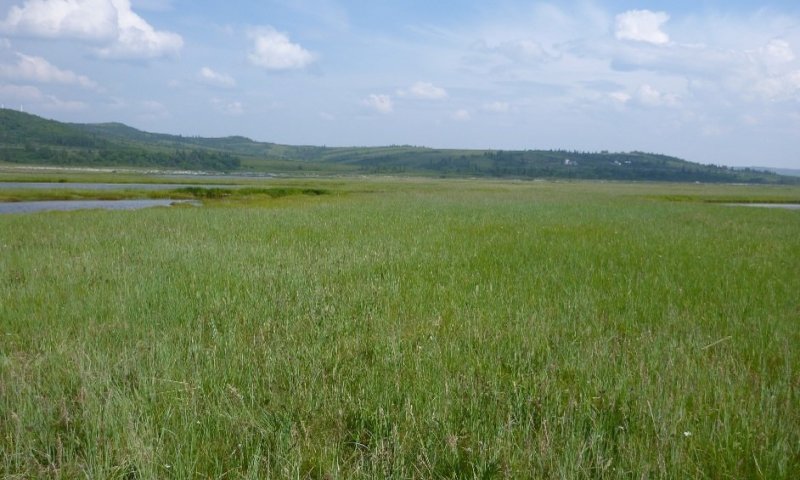
• The coastal plain complex ecological site describes all areas affected by coastal flooding at or slightly above sea level
• Occurs on plains and includes depressions
• Soils are varied and include well drained silt and silt-loam soils to wet, frozen and unfrozen, peat and mucky peat soils.
• Soil characteristics are partly driven by slope shape, flooding regime, and parent material
• Coastal flooding is the major disturbance
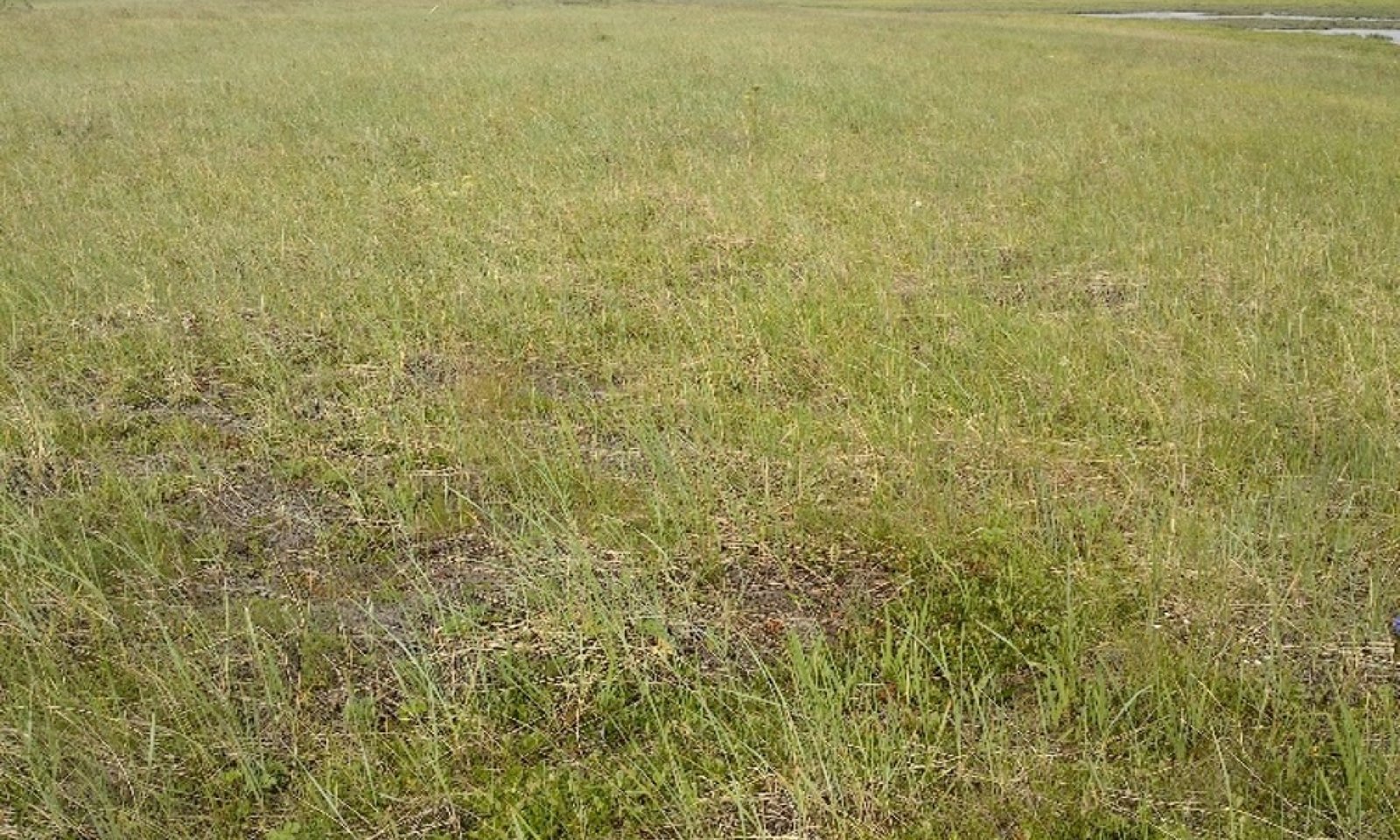
• The reference plant community is a scrub – sedge scrubland
Associated sites
| F230XY601AK |
Boreal Flood Plain Complex F230XY601AK describes boreal flood plains. These flood plains carve through the coastal plain where rivers, such as the Unalakleet River, reach the sea. |
|---|---|
| R240XY720AK |
Arctic Tussock Tundra Frozen Plains R240XY720AK is the tussock tundra. It is located on the sloping, non-flooding plains and foothills adjacent to and at higher elevations than the coastal plain. |
Similar sites
| R240XY720AK |
Arctic Tussock Tundra Frozen Plains R240XY720AK describes tussock tundra areas. The tussock tundra supports ericaceous shrubs, which may appear similar to this ecological site. The tussock tundra does not experience coastal flooding. |
|---|
Table 1. Dominant plant species
| Tree |
Not specified |
|---|---|
| Shrub |
(1) Empetrum nigrum |
| Herbaceous |
(1) Carex |



Click on box and path labels to scroll to the respective text.
Ecosystem states
State 1 submodel, plant communities
| 1.1a | - | Increase flooding influences |
|---|---|---|
| 1.2a | - | Decrease flooding influences |