

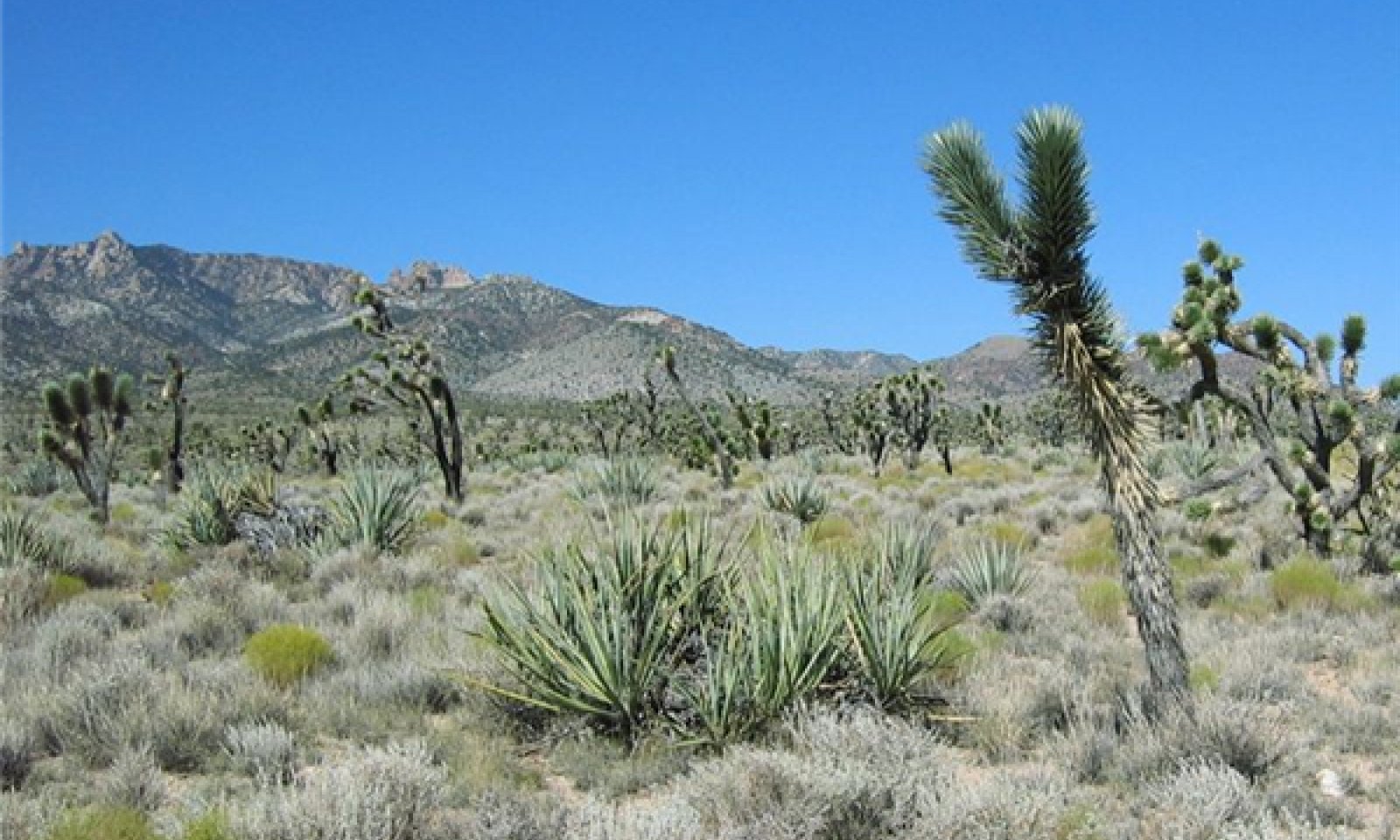
Petrocalcic Fan Remnants

Scenario model
Current ecosystem state
Select a state
Management practices/drivers
Select a transition or restoration pathway
- Transition 1 More details
- Transition 1 More details
- Transition 2 More details
- Restoration pathway 2 More details
-
No transition or restoration pathway between the selected states has been described
Target ecosystem state
Select a state
Description
This state represents the natural range of variability for this ecological site, pre-European settlement. This state no longer exists due to the naturalization of non-native species in the Mojave Desert. Data for this State does not exist. This state had only native species, no livestock grazing, and fire was not a part of the natural disturbance cycle. Fluctuations in annual productivity would have occurred with climatic variability.
Submodel
State 2
Non-native species present

Description
This is the current potential state for this ecological site. It is similar in composition to the historical plant community, but non-native species are present, and livestock grazing and severe, large fire introduce new ecological dynamics.
Submodel
Mechanism
This transition occurred with naturalization of non-native annual species such as red brome (Bromus rubens), cheatgrass (Bromus tectorum), and redstem storks bill (Erodium cicutarium) with European exploration and settlement from the 1860s through the 1900s (e.g. Brooks and Chambers 2011). The ubiquitous presence of non-native annuals means that removing them entirely is essentially impossible.
Mechanism
This transition occurred with naturalization of non-native annual species such as red brome (Bromus rubens), cheatgrass (Bromus tectorum), and redstem storks bill (Erodium cicutarium) with European exploration and settlement from the 1860s through the 1900s (e.g. Brooks and Chambers 2011). The ubiquitous presence of non-native annuals means that removing them entirely and returning to the reference state is essentially impossible.
Mechanism
Occurs with repeated severe fire or with continued overgrazing, especially during drought or after fire.
Model keys
Briefcase
Add ecological sites and Major Land Resource Areas to your briefcase by clicking on the briefcase ( ) icon wherever it occurs. Drag and drop items to reorder. Cookies are used to store briefcase items between browsing sessions. Because of this, the number of items that can be added to your briefcase is limited, and briefcase items added on one device and browser cannot be accessed from another device or browser. Users who do not wish to place cookies on their devices should not use the briefcase tool. Briefcase cookies serve no other purpose than described here and are deleted whenever browsing history is cleared.
Ecological sites
Major Land Resource Areas


The Ecosystem Dynamics Interpretive Tool is an information system framework developed by the USDA-ARS Jornada Experimental Range, USDA Natural Resources Conservation Service, and New Mexico State University.