


Shallow Foothill Palmer Divide

Scenario model
Current ecosystem state
Select a state
Management practices/drivers
Select a transition or restoration pathway
- Transition T1A More details
- Transition T1B More details
-
Restoration pathway R2A
Forest Stand Improvement. Prescribed Grazing. Prescribed Burning. Range Planting.
More details -
Restoration pathway R3A
Brush Management. Prescribed Grazing. Range Planting. Prescribed Burning.
More details -
No transition or restoration pathway between the selected states has been described
Target ecosystem state
Select a state
State 1
Reference
Description
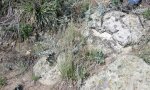
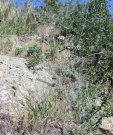
The Reference state of the Shallow Foothill Palmer Divide ecological site is a dynamic state that contains three vegetative communities. These communities fluctuate within the parameters that define the state. Precipitation patterns and management strategies regarding herbivory and the presence or absence of fire are the primary drivers that determine the distribution of these communities throughout this state (Anderson, et al, 1982).
Characteristics and indicators
This state has not been sodbusted or overly eroded and has only slight to moderate vegetative deviation from the historical mixed- grass prairie community.
Resilience management
The Reference state can be maintained by managing herbivory with appropriate stocking rates, and timing and duration of grazing periods. Maintaining a natural fire regime with appropriately timed prescribed burning also contributes to the resilience of this state.
Submodel
Description
The Conifer Dominated Ponderosa Pine State contains one plant community phase.
Characteristics and indicators
The ponderosa pine canopy has increased to 30 to 40 percent and dominates the overstory. Gambel oak, mountain mahogany, and skunkbush sumac (Rhus trilobata) are the dominant shrubs. Fendler threeawn (Aristida purpuea), and sand dropseed (Sporobolus cryptandrus) are the primary native grasses.
Resilience management
Light herbivory and minimal overstory disturbance maintains this state.
Submodel
Description
The Deciduous Shrub Dominated State is characterized by two plant community phases. The Gambel Oak and Mountain Mahogany community and the Gambel Oak community represent the state. Gambel oak has significantly increased, along with mountain mahogany, and dominate the characteristic vegetation. Introduced grasses and forbs are present.
Characteristics and indicators
The Gambel Oak and Mountain Mahogany community and the Gambel Oak community represent the state. Gambel oak has significantly increased, along with mountain mahogany, and dominate the characteristic vegetation. Introduced grasses and forbs are present.
Submodel
Mechanism
Excessive herbivory without adequate recovery opportunity and disruption of the historical fire regime are the drivers of this transition.
Constraints to recovery
The degree of shading and competition for resources by the overstory dictates the ability of the system to recover.
Context dependence
Local precipitation patterns greatly influence the rate and degree of restoration.
Mechanism
Stand replacing fire or timber harvest with excessive herbivory drives the Reference State across an ecological threshold to the Deciduous Shrub Dominated State.
Constraints to recovery
The degree of shading and competition for resources by the overstory dictates the ability of the system to recover.
Context dependence
Local precipitation patterns greatly influence the rate and degree of restoration, as does the presence or absence of native species propagation material.
Mechanism
Timber harvest or stand replacing fire followed by long-term prescribed grazing facilitates recovery to the Reference State.
Context dependence
The degree of fire and timber harvest, and the ability of the remnant native vegetation to propagate determine the likelihood of success. Growing season precipitation patterns influence the degree of restoration.
Relevant conservation practices
| Practice | External resources |
|---|---|
|
Prescribed Burning |
|
|
Prescribed Grazing |
|
|
Range Planting |
|
|
Forest Stand Improvement |
Mechanism
Brush control followed by long-term prescribed grazing facilitates recovery to the Reference state. Prescribed fire helps maintain this restoration.
Context dependence
The amount and timing of growing season precipitation greatly influences the temporal and spatial recovery, as does the presence or absence of native species propagation material.
Relevant conservation practices
| Practice | External resources |
|---|---|
|
Brush Management |
|
|
Prescribed Burning |
|
|
Prescribed Grazing |
|
|
Range Planting |
Model keys
Briefcase
Add ecological sites and Major Land Resource Areas to your briefcase by clicking on the briefcase ( ) icon wherever it occurs. Drag and drop items to reorder. Cookies are used to store briefcase items between browsing sessions. Because of this, the number of items that can be added to your briefcase is limited, and briefcase items added on one device and browser cannot be accessed from another device or browser. Users who do not wish to place cookies on their devices should not use the briefcase tool. Briefcase cookies serve no other purpose than described here and are deleted whenever browsing history is cleared.
Ecological sites
Major Land Resource Areas


The Ecosystem Dynamics Interpretive Tool is an information system framework developed by the USDA-ARS Jornada Experimental Range, USDA Natural Resources Conservation Service, and New Mexico State University.